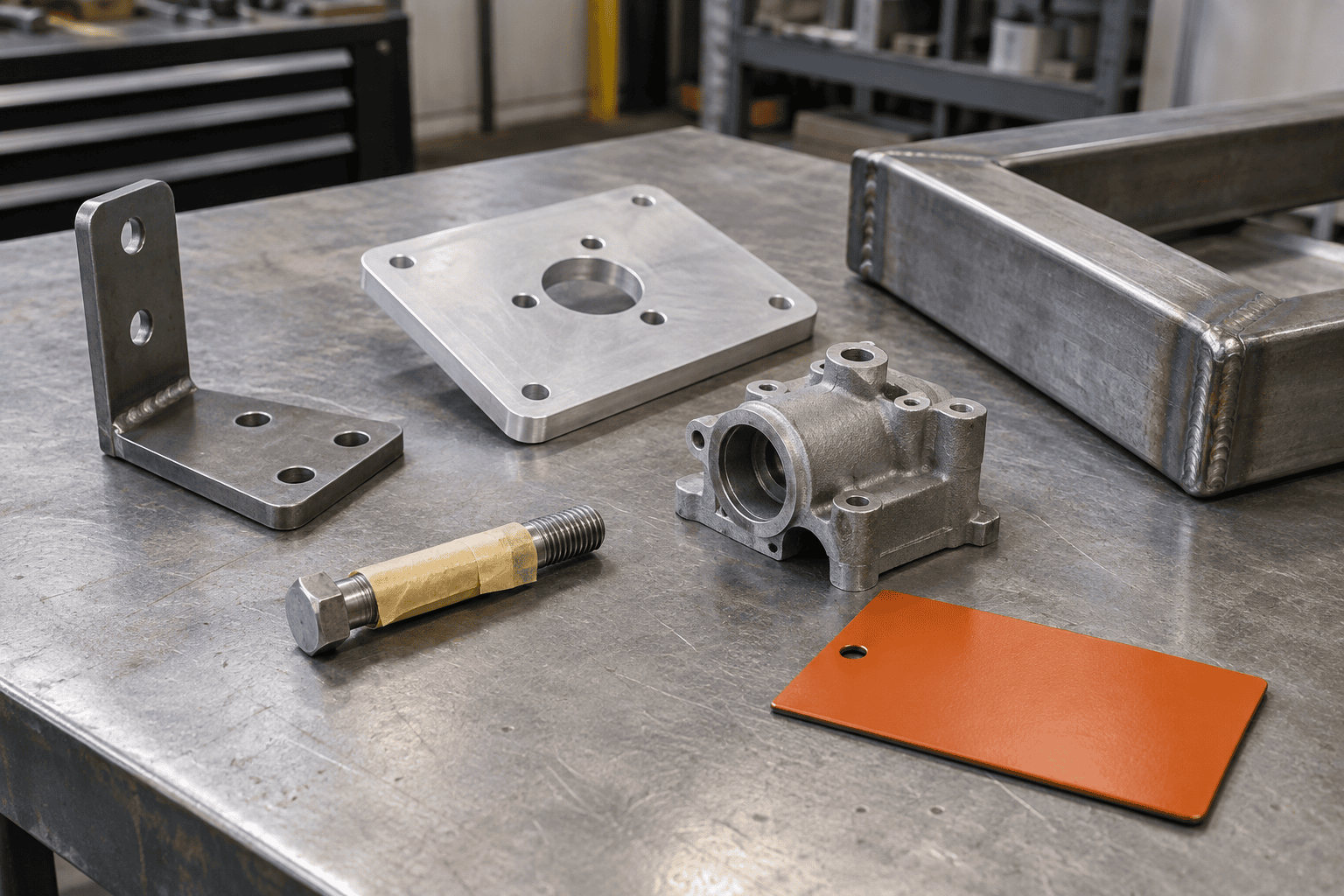
Powder coating is usually a good fit for a metal project when the part can be electrically grounded, prepared to a clean and stable surface, heated through the powder’s specified cure cycle, and handled within the coater’s equipment limits. The material alone does not decide the answer. Construction, existing finish, hidden contaminants, masking needs, service environment, size, weight and quantity all matter.
Use the checks below before sending a custom metal project to a powder coating shop. They will help you spot easy candidates and the details that need a technical review.
1. Start with the base material
Powder is commonly applied by electrostatic spray, so the part needs a reliable path to ground. Steel and aluminum are common candidates, while galvanized metal, castings, stainless steel and other alloys can require different preparation or powder choices. Identify the material rather than assuming every metal should be treated the same.
PPG’s powder application overview explains that charged powder particles are attracted to a grounded part and then cured with heat. That basic process is why both electrical continuity and heat tolerance belong in the first screening step.
2. Decide whether the complete part can tolerate curing
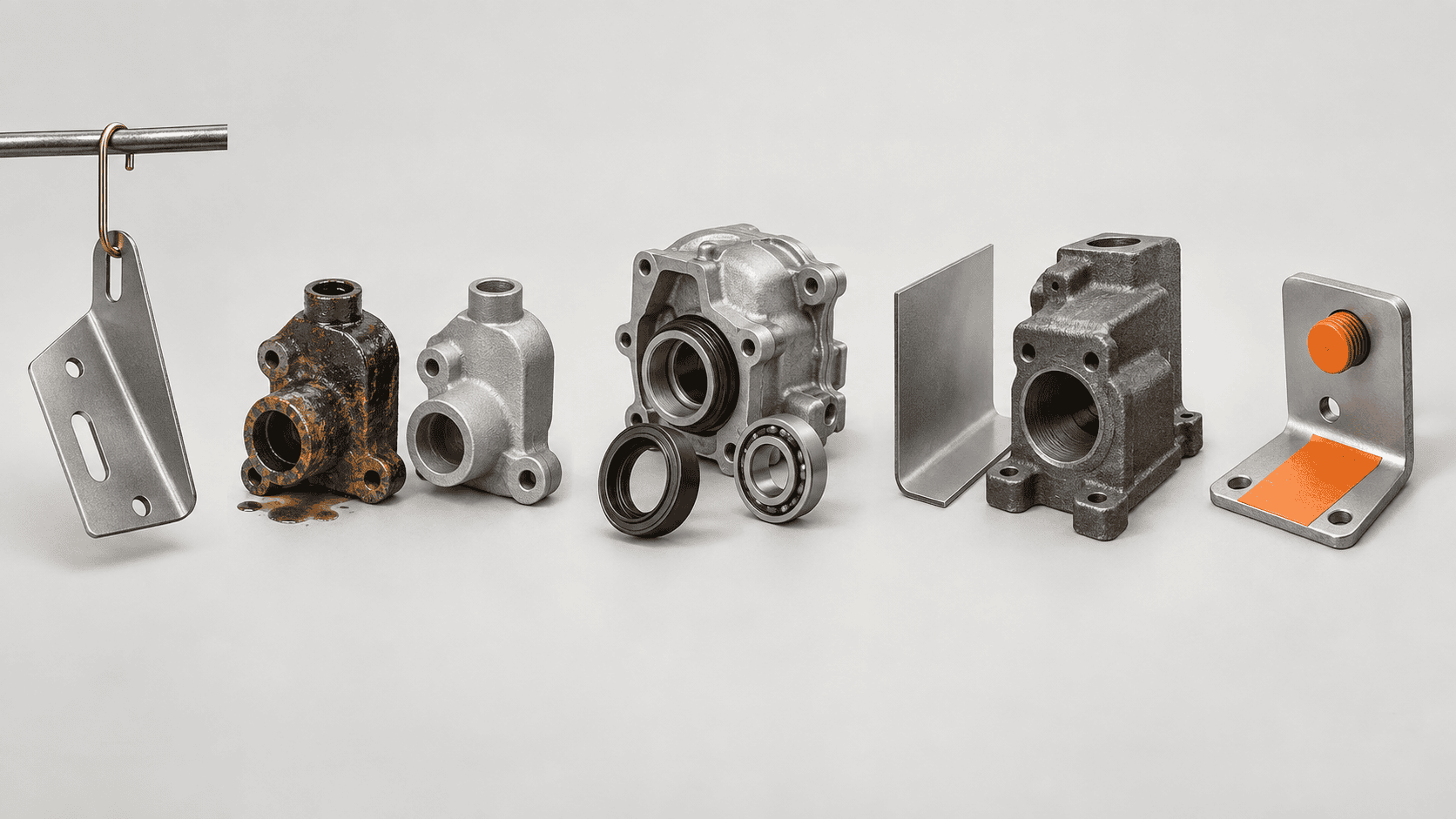
Ask whether the project is a bare metal component or an assembly. Rubber seals, plastic inserts, bearings, electronics, lubricants and adhesives may need to be removed before coating. Thin sheet can respond to heat differently from a heavy casting, and the metal—not just the oven air—must reach the cure conditions specified for the selected powder.
PPG notes that cure requirements vary by formulation and that substrate weight affects how quickly the part reaches temperature. A coater should review unusually thin, heavy, sealed or mixed-material parts before promising a process.
3. Look closely at the starting surface
Oil, rust, mill scale, old paint, previous powder, corrosion products and fabrication residue can interfere with the coating system. Pitting and porous castings may also release trapped material during heating. The right preparation depends on the substrate, contamination, current coating and required performance.
The Powder Coating Institute’s technical FAQ emphasizes clean parts and appropriate pretreatment because those steps support adhesion and corrosion resistance. For a practical buyer overview, see Why Surface Preparation Matters.
4. Plan hanging, access and masking
The shop needs a place to hang or rack the part while maintaining electrical contact. Deep recesses, tight inside corners, enclosed cavities and overlapping joints may affect cleaning, powder application or venting. Threads, bearing seats, electrical contacts, sealing faces and close-tolerance holes often need to remain uncoated.
Mark those areas on a drawing or photo. A simple note such as “mask this face” is more useful when it also states what mates to the face and how much clearance the assembly allows.
5. Match the finish to the environment
Indoor décor, outdoor exposure, repeated handling, chemicals, sunlight and corrosion risk do not call for the same coating system. State where the part will be used and what it must resist. Then choose color, gloss and texture after the performance needs are clear.
If appearance is still open, Planning Color and Texture for Metal Parts explains how lighting, surface condition and finish selection affect the result.
6. Confirm size, weight, quantity and handling
Every shop has practical limits for preparation equipment, spray areas, ovens and material handling. Provide the overall dimensions, approximate weight, quantity and delivery format. Large welded fabrications, long parts and dense castings deserve an early fit check even when the metal itself is suitable.
Projects that need extra review
- Assemblies containing heat-sensitive or nonmetal parts
- Oil-impregnated, porous or heavily contaminated castings
- Sealed cavities or overlapping joints that can trap cleaners, air or residue
- Very thin panels that may distort with heat
- Parts with no acceptable hanging or grounding point
- Projects governed by a drawing, coating specification or required test result
Send these details for a useful first review
- Material or best available material description
- Overall dimensions and approximate weight
- Quantity now and expected repeat quantity
- Current finish, rust, oil or contamination
- Indoor or outdoor use and relevant chemical or weather exposure
- Desired color, gloss and texture
- Threads, fits, contacts and faces that must stay uncoated
- Clear photos plus a drawing or marked-up image when available
Our powder coating quote checklist shows how to package that information. When you are ready, request a Salt City review with photos and project details so the shop can confirm fit, preparation and next steps.