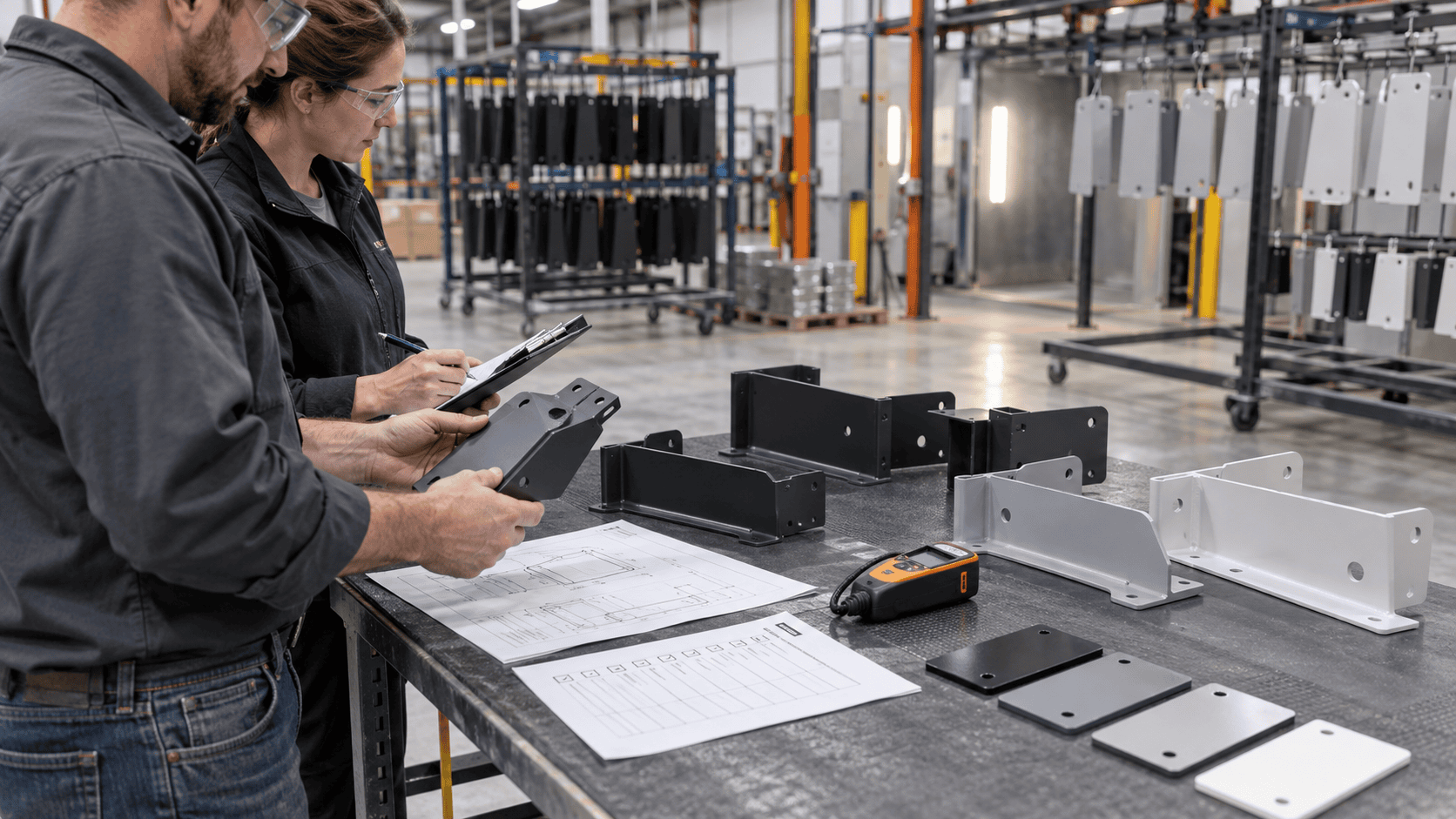
The best way to qualify a U.S. metal finishing supplier is to test the supplier against your actual part, finish specification, acceptance criteria, and production needs. A polished sales presentation can start the conversation, but it cannot prove that a coater can prepare, finish, inspect, package, and deliver your parts consistently.
This is the third article in our domestic supply-chain series. If you are still deciding whether localization makes sense, start with how domestic metal finishing can reduce supply-chain risk. If you are preparing the move, use our checklist for moving metal finishing to the U.S.. Once those questions are settled, use the qualification process below before releasing production work.
1. Start with one complete qualification package
Give every candidate the same information. That makes proposals easier to compare and exposes unanswered questions before they become production problems.
- The current drawing and revision level
- Base material, part condition, dimensions, weight, and expected quantities
- Service environment and required coating system
- Color, gloss, texture, and approved visual standard
- Threads, grounds, sealing surfaces, and other no-coat or masking areas
- Film-build, adhesion, corrosion, cosmetic, or customer-specific acceptance criteria
- Packaging, handling, labeling, lot-control, and delivery requirements
- Prototype, launch, recurring-release, and surge-volume assumptions
Do not ask a supplier to quote around missing requirements. If the finish specification is incomplete, flag the open questions and resolve them jointly. Salt City’s capabilities overview can help you identify the process details worth discussing early.
2. Check process fit before comparing price
A low quote is not useful if the part is a poor physical or technical fit for the line. Confirm that the supplier can safely handle the part’s size and weight, rack it without creating unacceptable marks, prepare the actual substrate and starting condition, and cure the coating without damaging the part or assembly.
Also ask how the supplier controls powder or coating-product identity, color changes, masking, rework, and mixed lots. Parts with trapped fluids, sealed cavities, heavy mass, castings, weld contamination, or tight mating surfaces may need additional review. A good supplier should identify those risks before the first production batch.
3. Ask for objective quality evidence
Qualification should be based on records and controls, not assurances. Depending on the job, ask how the supplier documents:
- Incoming condition and job travelers
- Surface-preparation and cure parameters
- Coating-product and lot traceability
- Film-thickness, adhesion, appearance, or other required inspections
- Gauge calibration and inspection frequency
- Nonconforming material, rework, corrective action, and process changes
Third-party frameworks can help buyers ask better questions. The Powder Coating Institute’s certification programs audit process control, equipment, maintenance, and quality systems for qualifying coaters and OEM operations. For automotive supply chains, AIAG’s CQI-12 Coating System Assessment is designed to support defect prevention, variation reduction, and continual improvement. These programs are useful examples of disciplined qualification; only require a particular certification when your customer, industry, or risk profile calls for it.
4. Run a controlled pilot on representative parts
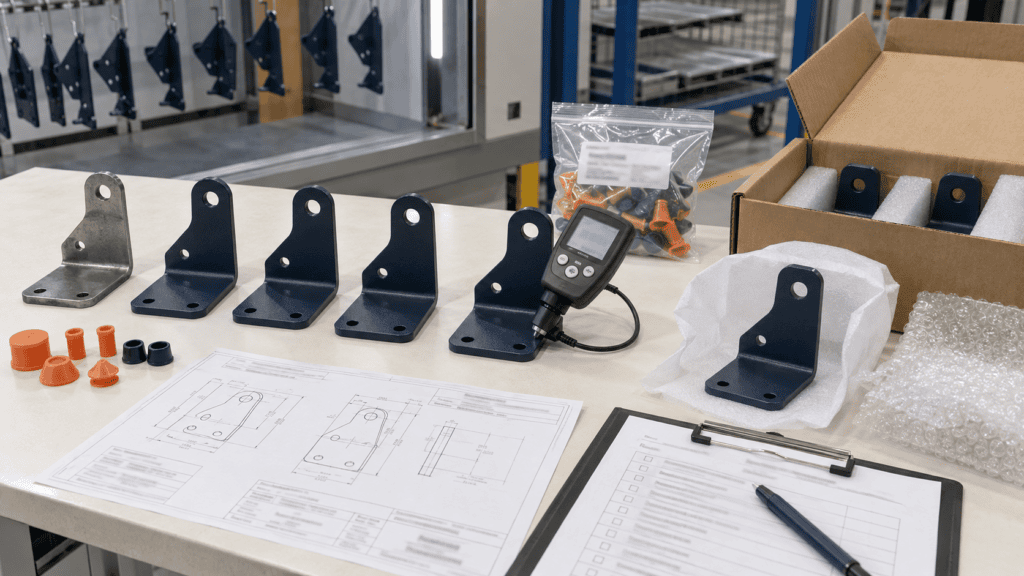
Before moving production volume, run a pilot using parts that represent the real geometry, material, welds, masking, cosmetic expectations, and packaging needs. Agree in advance on what will be measured, who accepts the result, and how any deviation will be documented.
There is no universal sample quantity. A useful pilot is large enough to reveal handling, racking, preparation, coating, inspection, and packaging issues that a single showcase part may hide. Record the starting condition and results, then keep an approved sample or agreed visual standard when appearance matters.
5. Qualify logistics and production readiness
The coating itself is only part of the supply chain. Confirm inbound and outbound packaging, carrier responsibilities, lot identification, standard lead-time assumptions, communication contacts, and the process for schedule or engineering changes. Ask how the supplier handles planned maintenance, demand spikes, rejected material, and urgent containment.
If you are still building a candidate list, the NIST Manufacturing Extension Partnership Supplier Scouting program helps manufacturers identify domestic suppliers with specific production and technical capabilities. Once you have candidates, qualify each one against the same package and scorecard.
A practical supplier qualification scorecard
| Qualification area | Evidence to review | Pass decision |
|---|---|---|
| Part and process fit | Size, weight, racking, preparation, cure, masking, and rework review | Supplier documents a workable process and known limitations |
| Quality controls | Inspection plan, calibrated equipment, records, and nonconformance process | Controls match the drawing and acceptance criteria |
| Pilot result | Representative parts, measured results, approved appearance, and deviations | Parts pass agreed requirements without unresolved exceptions |
| Capacity and launch | Expected volume, release pattern, lead time, and ramp plan | Capacity and timing are realistic for both sides |
| Packaging and logistics | Protection, labeling, lot control, transport, and handoff responsibilities | Finished parts arrive traceable and damage-free |
| Communication and change control | Named contacts, escalation path, corrective action, and change approval | Responsibilities and response expectations are clear |
A supplier does not need to be the biggest or the cheapest to be the right fit. The goal is a documented match between your parts, requirements, volumes, and risk tolerance and the supplier’s actual process.
Ready to qualify a finishing partner?
Send Salt City your drawing or photos, material, dimensions, part weight, quantities, finish requirements, masking areas, service environment, and packaging needs. We will tell you plainly whether the work fits our process and what should be resolved before a pilot. Request a quote to start the review.
Domestic Metal Finishing Supply-Chain Series
- How Domestic Metal Finishing Can Reduce Supply Chain Risk
- Before Moving Metal Finishing to the U.S.: A Checklist for International Manufacturers
- How to Qualify a U.S. Metal Finishing Supplier Before Moving Production