
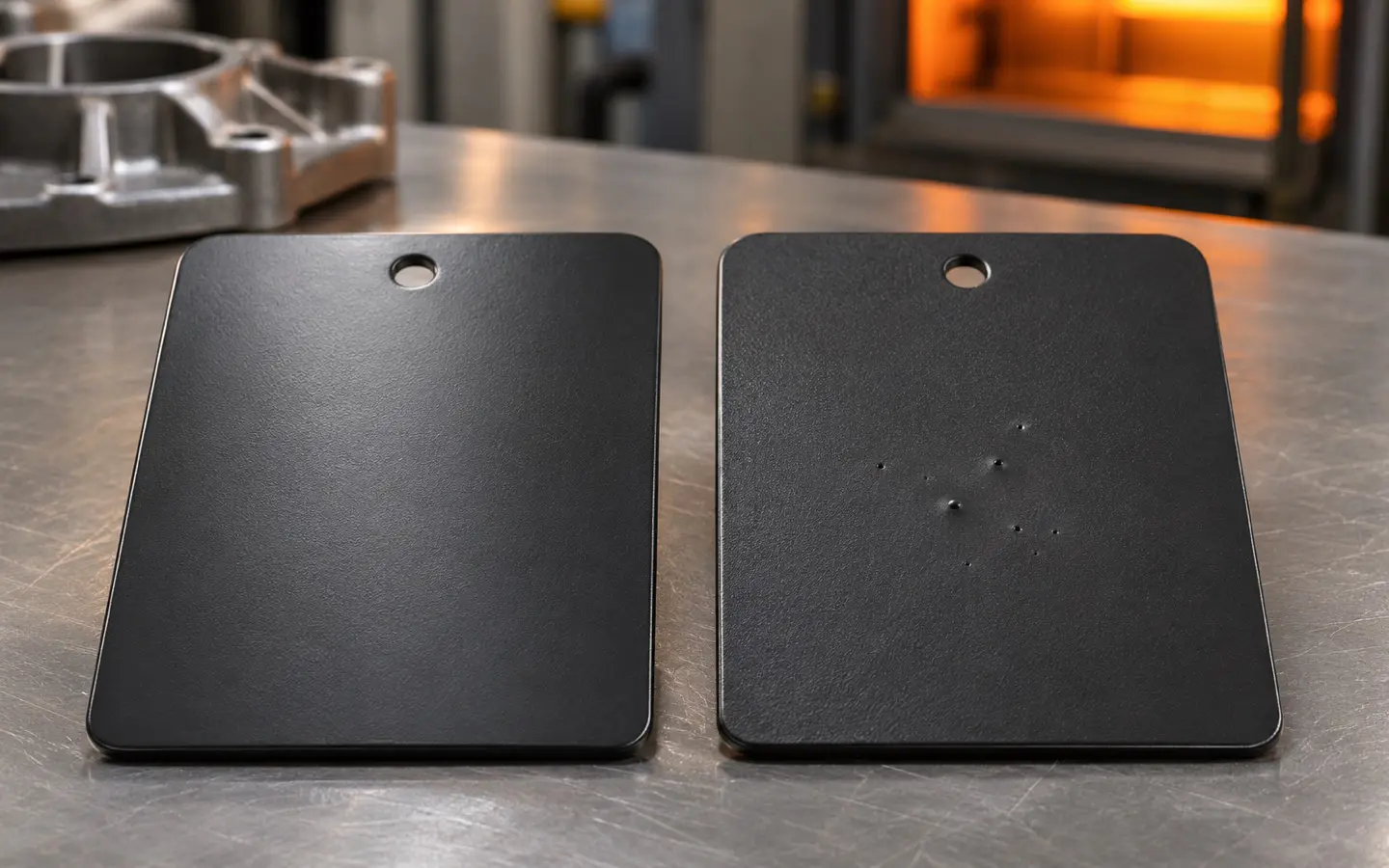
Powder coating can develop bubbles, craters, or pinholes when trapped air, moisture, oils, or other volatile material escapes through the coating as it melts and cures. That process is often called outgassing. But appearance alone does not prove the cause: contamination, application conditions, film build, or cure problems can create similar-looking defects, so the part and process history matter.
Why bubbles can appear during cure
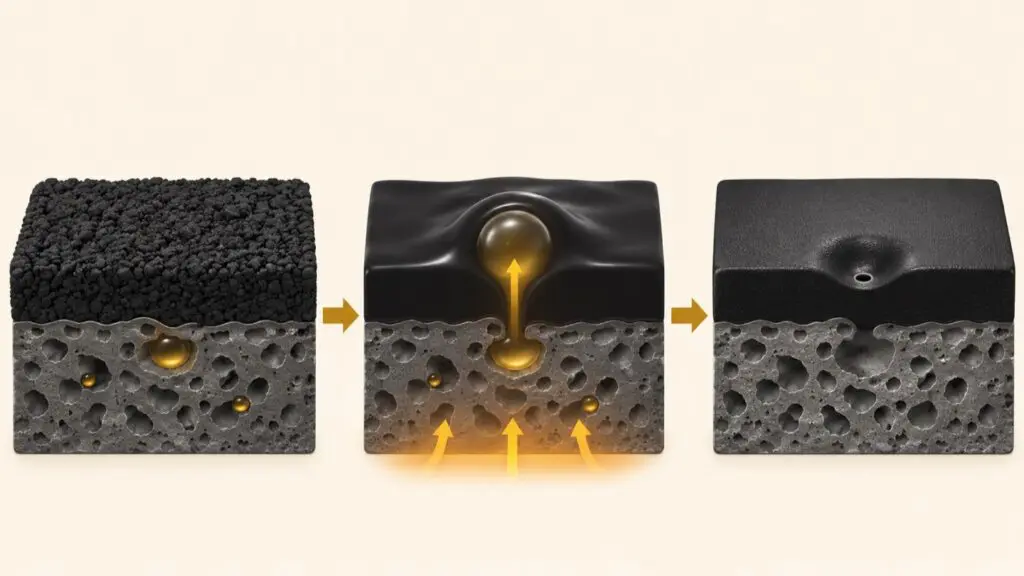
Powder is applied as a dry material, then heated until it flows into a film and cures. If gas leaves the metal, a pretreatment layer, a primer, or contamination while that film is forming, it can push through the soft coating. The result may be a small pinhole, a crater, or a raised bubble.
A current Powder Coated Tough expert answer describes trapped air, moisture, oils, and other volatiles expanding as the part heats and leaving pinholes or craters after the coating solidifies. The important point for a buyer is that the visible defect is the end of the story, not a complete diagnosis of what caused it.
Which parts deserve an early outgassing review?
PPG’s powder-coating technical FAQ identifies metal castings, galvanized steel, and hot-rolled steel among the substrates that can be prone to outgassing. It also notes that moisture, oils, rust, pretreatment, primers, coating thickness, part heat-up rate, and cure conditions can affect the defect.
That does not mean every casting or galvanized part will bubble. It means the risk should be discussed before a production run. Parts with a porous casting, unknown service history, trapped oils, heavy oxidation, sealed cavities, or residues from fabrication and cleaning deserve extra attention. Our guide to preparing welded parts for powder coating explains why fabrication details should be reviewed before finishing.
What can change the coating plan?
The correct response depends on the substrate, defect source, powder, appearance standard, and production requirements. A coater may consider additional cleaning or surface preparation, a controlled preheat or outgassing trial, an outgas-forgiving coating system, adjusted film build or cure conditions, or a small representative test batch before committing the full quantity.
No single step guarantees a defect-free result on every part. PPG notes that preheating conditions must be determined by trials and that even anti-outgassing powders cannot eliminate every severe case. Powder Coated Tough likewise recommends testing a few representative parts when an unfamiliar casting or other higher-risk substrate is involved. That is why surface preparation and the complete coating plan should be reviewed together.
Send these details before asking for a diagnosis
- full-part photos plus close-ups of the bubbles, craters, or pinholes;
- the metal and manufacturing method, such as cast, hot-rolled, or galvanized;
- whether the part is new, used, welded, previously coated, chemically stripped, or exposed to oil or moisture;
- the cleaning, blasting, pretreatment, primer, powder, and cure history, if known;
- dimensions, weight, quantity, and whether the job will repeat;
- the required color, gloss, texture, and acceptable appearance; and
- the service environment and any written performance specification.
Do not promise that a surface can be diagnosed—or corrected—from one close-up photo. The most useful review connects the visible defect to the substrate, preparation, coating system, and process history.
Next step: send Salt City the part details and photographs. The team can review whether the project fits the shop and identify the questions that should be resolved before coating or recoating begins.