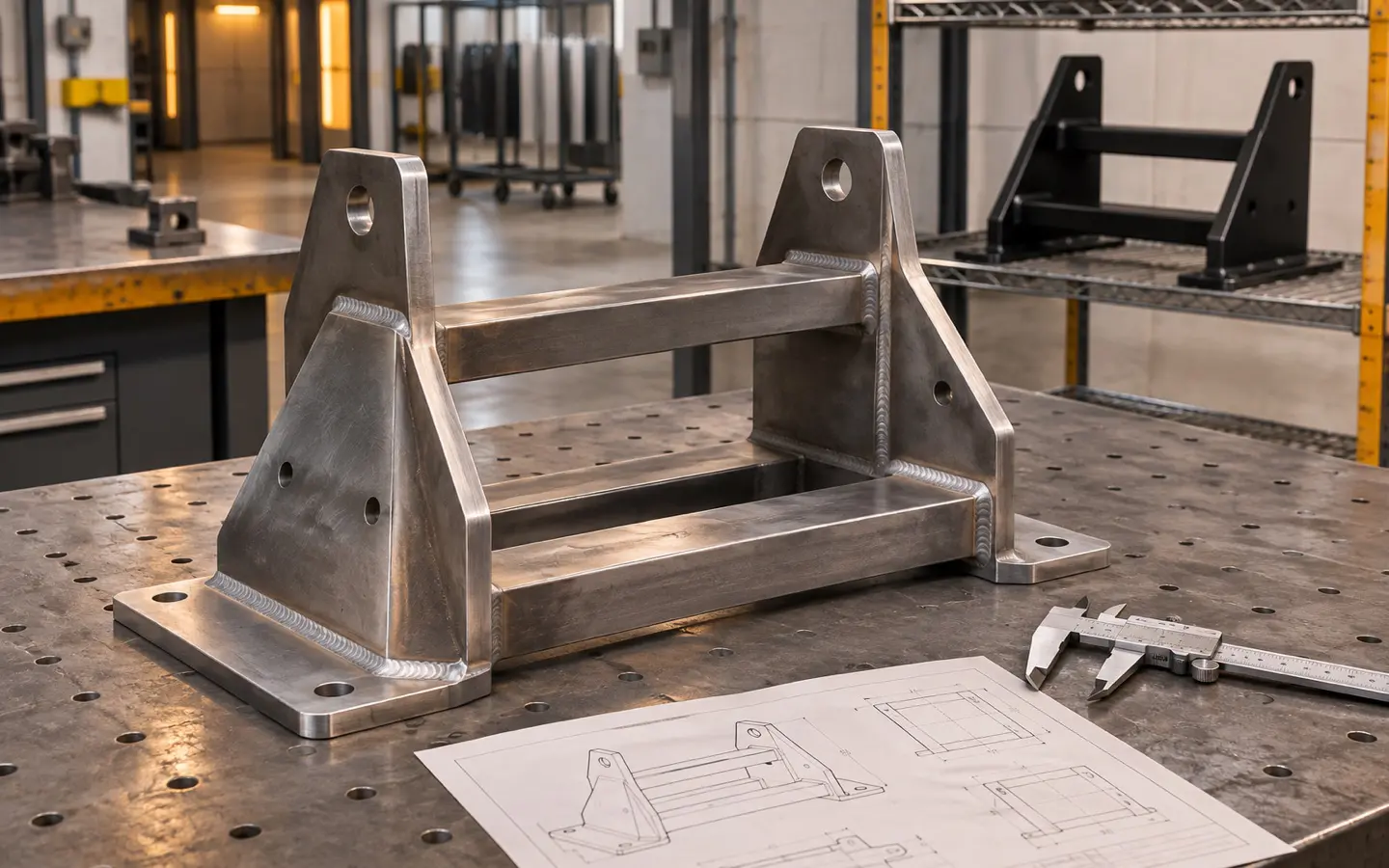
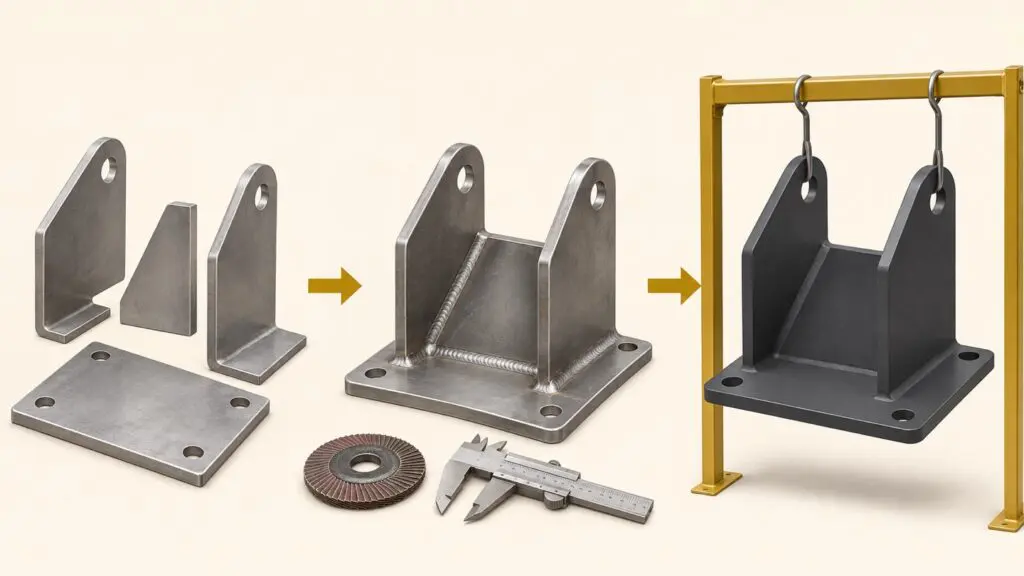
Most metal parts should be completely fabricated before powder coating. Finish the cutting, forming, drilling, welding, grinding, deburring, test-fitting, and inspection first; then prepare and coat the finished assembly. That order protects the coating and lets the fabricator correct metalwork before the finish makes repairs harder.
The exception is a part intentionally designed to be coated in separate pieces and assembled afterward. That decision should be made from the drawing and service requirements—not improvised after coating.
Why fabrication normally comes first
Welding, cutting, or heavy forming after powder coating exposes bare metal and damages the finish around the work area. Heat can discolor or destroy nearby coating, forming can crack a cured film, and grinding can remove it entirely. A 2026 Powder Coated Tough expert answer notes that forming after coating can crack the film and that welding introduces surface and heat-affected-zone challenges.
There is also a worker-safety reason not to treat a coated surface like clean bare metal. OSHA’s welding and cutting fact sheet says coatings should be removed from the work area when they could create toxic exposure. Any hot work on a coated part needs an appropriate hazard review and controls.
What should be finished before the part reaches the coating shop?
- Complete the shape. Cut, form, drill, and machine the part to its approved dimensions.
- Finish the joints. Complete welding, remove spatter, and establish the specified appearance of visible welds without changing required strength.
- Plan access. Confirm that corners, seams, cavities, drain paths, and hanging points can be prepared, coated, and cured as the design requires.
- Test the fit. Verify mating faces, threads, holes, bearing points, electrical grounds, and removable parts. Identify every area that must remain uncoated.
- Inspect the metalwork. Powder coating follows the surface below it; it does not reliably hide uneven seams, deep grind marks, distortion, or other fabrication defects. Salt City’s guide to powder coating welded parts covers the appearance and fit decisions to resolve before finishing.
When might the sequence be different?
A modular product may be coated as separate components and then bolted together. A specially engineered prefinished-metal system may also be designed and tested for downstream forming. Those are controlled processes with known materials, bend limits, contact surfaces, and repair procedures—not a general reason to weld or reshape an ordinary powder-coated part.
If a field weld is unavoidable, plan it before coating. The plan should cover coating removal, hot-work safety, access for cleaning and preparation, and an approved restoration method. A liquid touch-up may protect a small area, but it should not automatically be represented as visually or physically identical to the original factory-applied powder system.
The selected powder also has a product-specific cure schedule based on the metal’s temperature and time at temperature. For example, AkzoNobel’s Interpon technical data lists defined object-temperature cure windows. Late fabrication changes can therefore affect more than appearance; they can disrupt a coating system that was designed and cured as a complete process.
Use this handoff checklist
- Material, overall dimensions, weight, quantity, and drawing revision
- Photos of welds, cut edges, corners, cavities, and current surface condition
- Indoor, outdoor, chemical, washdown, or wear exposure
- Color, gloss, texture, and acceptance standard
- Threads, holes, mating faces, grounds, and other masking points
- Whether components will be assembled before or after coating
- Schedule, packaging, and repeat-order requirements
Surface condition still matters after fabrication is complete; see why surface preparation matters. When you are ready, send drawings, photos, dimensions, quantity, finish requirements, and the intended assembly sequence through Salt City’s quote request so the shop can review the actual part before confirming a coating plan.