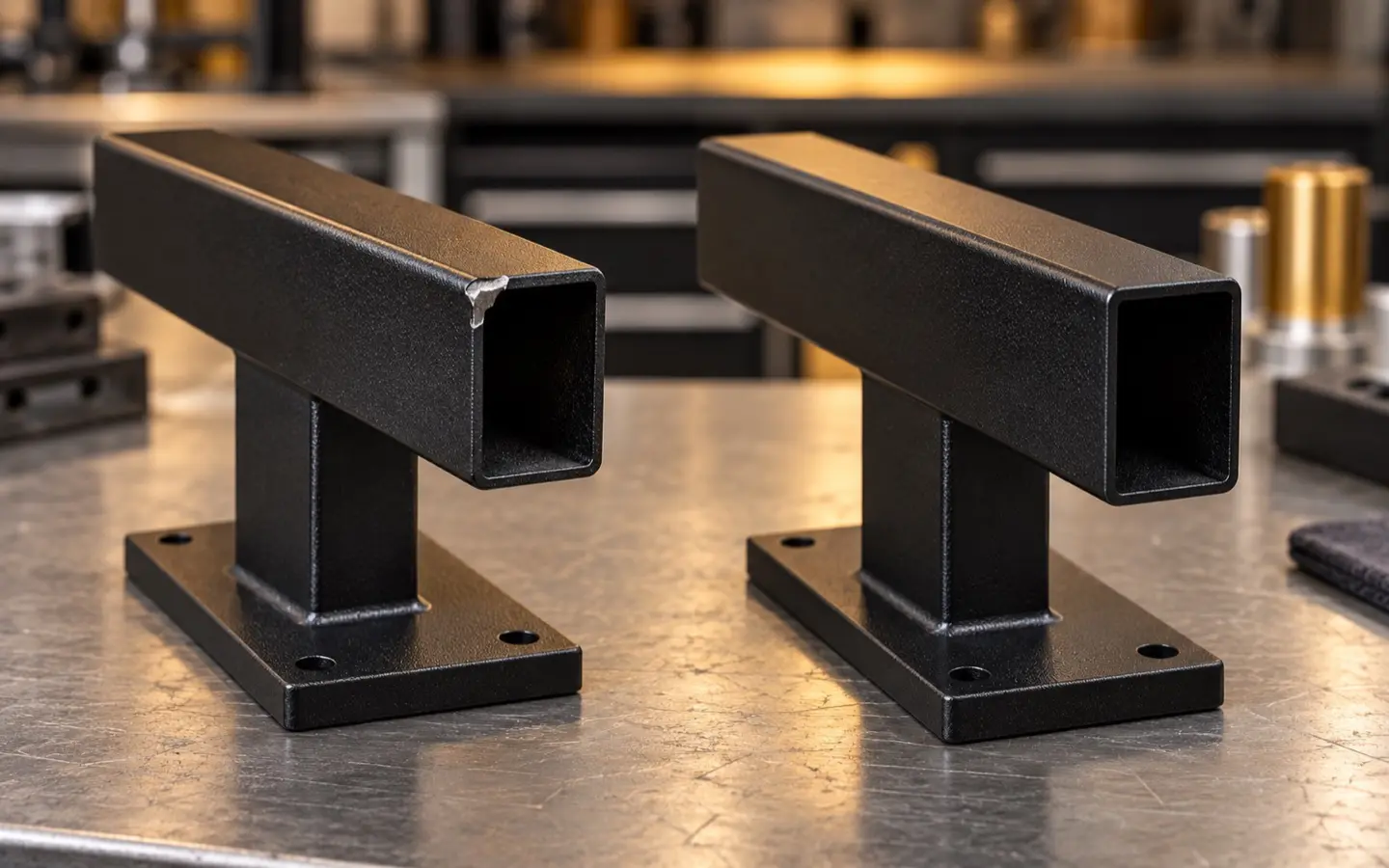
Yes—small, isolated damage to powder coating can often be protected with a liquid touch-up, but the repair is not the same as the original oven-cured powder finish and may remain visible. If the coating is peeling, corrosion is spreading underneath it, or appearance and performance must match the original specification, stripping and recoating the part is usually the more reliable choice.
First decide whether the coating is damaged or failing
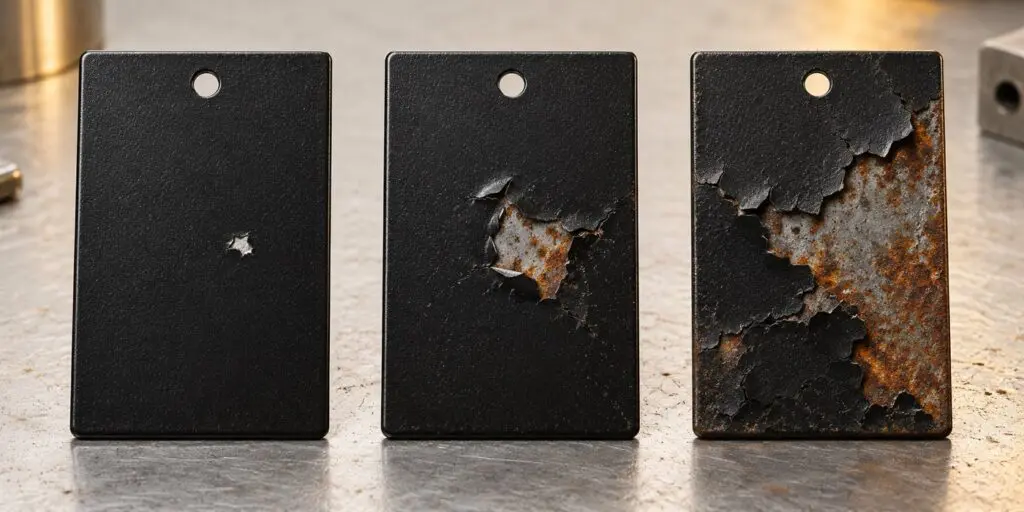
A chip caused by shipping, installation, or impact is different from coating that is lifting across a larger area. A localized chip may have sound coating around it. Peeling edges, blistering, widespread rust, or coating that releases easily can point to a broader adhesion or preparation problem.
Before anyone sands, cleans, or paints the area, photograph the entire part and then the damage at close range. That gives the coater a better chance to see whether the problem is isolated or part of a larger pattern. If the surrounding finish is already separating, covering the exposed spot will not correct what is happening underneath.
When a touch-up can make sense
A carefully selected liquid touch-up can be useful when the damage is small, the surrounding powder is firmly bonded, and the immediate goal is to cover exposed metal or make a minor blemish less noticeable. The repair material should be compatible with the existing coating, substrate, and service environment.
AkzoNobel’s Interpon architectural repair guidance uses suitable liquid paint for localized repairs and warns that a repaired area can weather differently from the original powder coating. That is the practical limitation buyers should expect: a touch-up may protect a small area, but gloss, texture, color, edge shape, and long-term weathering may not blend perfectly.
Appearance is especially difficult with low-gloss black, fine textures, metallic effects, and older finishes. Keep the powder manufacturer, product code, gloss, texture, and an approved sample if one exists. Our guide to preserving a repeat powder-coat finish explains why a color name alone is usually not enough.
When recoating is the better decision
Recoating should be considered when damage is widespread, corrosion has moved beneath the film, edges continue to lift, the original finish was incorrectly prepared or cured, or the repaired area must meet a written appearance or performance requirement. A highly visible architectural face, a corrosive exposure, or a critical customer specification leaves less room for a cosmetic patch.
Recoating is more than spraying new powder over the damaged spot. The existing finish and corrosion must be evaluated, the surface must be prepared for the selected system, and the part must still be suitable for another cure cycle. The Powder Coating Institute’s technical FAQ emphasizes that cleaning, substrate condition, pretreatment, and the complete coating system all influence adhesion and performance. Our overview of why surface preparation matters gives buyers the larger framework.
Send these details before choosing a repair
- clear photos of the whole part, the damaged area, and the edges around it;
- the metal type and whether rust or white corrosion is visible;
- the powder manufacturer, product code, color, gloss, and texture, if known;
- how and when the damage occurred and whether it is spreading;
- indoor, outdoor, chemical, moisture, or other service exposure;
- the size, weight, quantity, and whether matching parts are still in service; and
- any written appearance, corrosion, warranty, or performance requirement.
Do not assume a touch-up and a full recoat solve the same problem. One is a localized repair; the other rebuilds the finish over a properly evaluated surface.
Next step: send Salt City photos and project details. The team can review the damage, finish information, part geometry, and service conditions before discussing whether the project fits a touch-up plan, a full recoat, or another solution.