

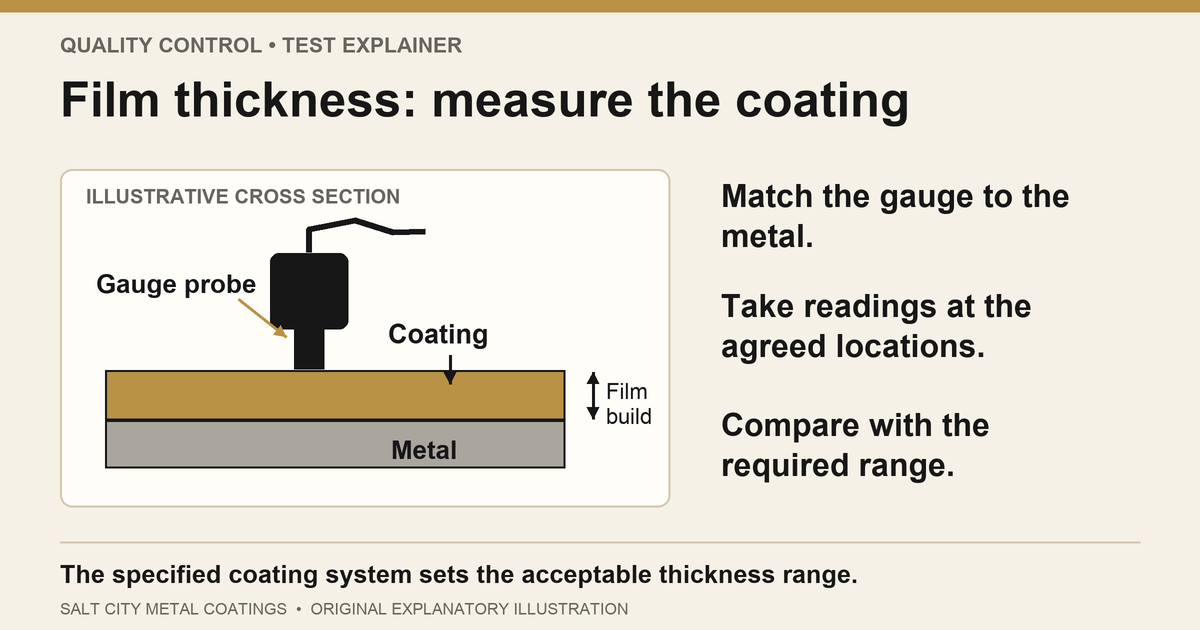
Powder coating thickness is usually measured after curing with a gauge suited to the base metal. The useful result is a set of readings compared with agreed limits, rather than one number taken anywhere on the part. ASTM D7091 describes the magnetic and eddy-current methods used for this kind of nondestructive measurement.
Why the thickness reading matters
The powder manufacturer’s product information and the project specification should guide the required film build. Thickness can affect appearance, coating performance and the fit of assembled pieces. More coating is not automatically better: the aim is the specified range for that system. DeFelsko’s powder-coating measurement guide explains these practical reasons for checking film thickness.
Keep the unit clear. A mil means one thousandth of an inch, not a millimeter; one mil equals 25.4 micrometers. A report should identify its units so drawings, powder data and inspection results can be compared correctly.
How the measurement is made
For cured coatings on metal, the operator selects a suitable instrument and probe for the substrate. Magnetic principles are used on ferrous metals; eddy-current instruments are used for suitable nonferrous applications. A gauge should be matched to the actual coating/substrate combination, as described in DeFelsko’s instrument overview.
A reliable check also depends on verifying the gauge and using it correctly. Rough blasted surfaces, curved parts, edges and thin metal can affect readings. Checking against appropriate references and accounting for the substrate matters as much as the display itself. DeFelsko’s accuracy guide distinguishes these effects and the difference between calibration and routine verification.
Where checks happen and what a panel represents
Portable gauges make thickness checks practical in shop quality control and receiving inspection. An independent inspection provider or laboratory may be specified when the buyer needs separate verification. Agree who will measure, where and what evidence is required before treating either arrangement as part of the order.
A representative panel can help document a coating run, but its result describes that specimen. It does not establish the thickness in every recess or on every production part. ASTM notes that coating build varies across a surface, so a single reading may not represent the coating system. Agree sampling locations and how any panel relates to the actual parts. See ASTM’s measurement scope.
What to agree before the job starts
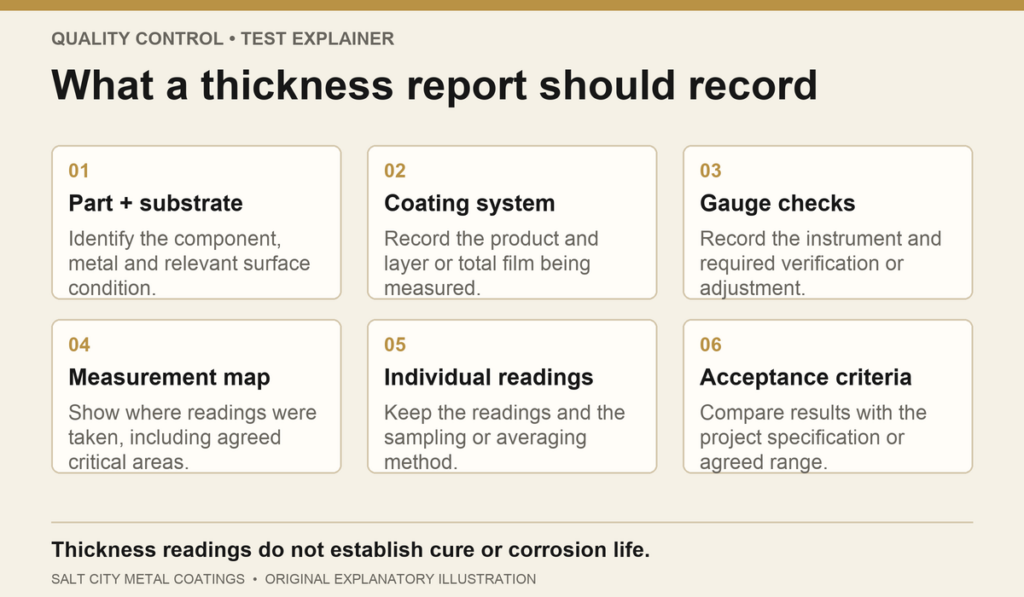
- The powder product, substrate, required range and units.
- Whether limits apply to each layer, total build or both.
- Which parts, areas and quantities will be checked.
- How readings and any out-of-range result will be assessed.
- Whether you need recorded values, instrument identification or an independent report.
For example, “check the coating” leaves a repeat order open to different interpretations. A more useful purchase requirement names the drawing revision, finish system, agreed measurement areas, sampling plan and report needed before shipment. Request that scope during quoting rather than after the parts are finished.
What thickness alone cannot confirm
A thickness measurement answers a dimensional question. It does not, by itself, demonstrate adhesion, cure, corrosion resistance or years of service life. Those questions need their own appropriate evidence. A calibrated instrument also does not make an entire coating operation independently certified.
Testing at Salt City
At Salt City, testing is performed at customer request under an agreed job scope, and a testing charge may apply. Coating-thickness, MEK and cross-hatch checks may be done in house. Salt spray testing is performed by an outside laboratory to help validate protocols, not to guarantee results in service. Confirm the required methods, samples, acceptance criteria and reporting before work begins.
For your project, request a quote with the drawing, powder specification, required limits and reporting needs so the inspection scope can be reviewed. For the separate question of typical coating build, see how thick powder coating is.