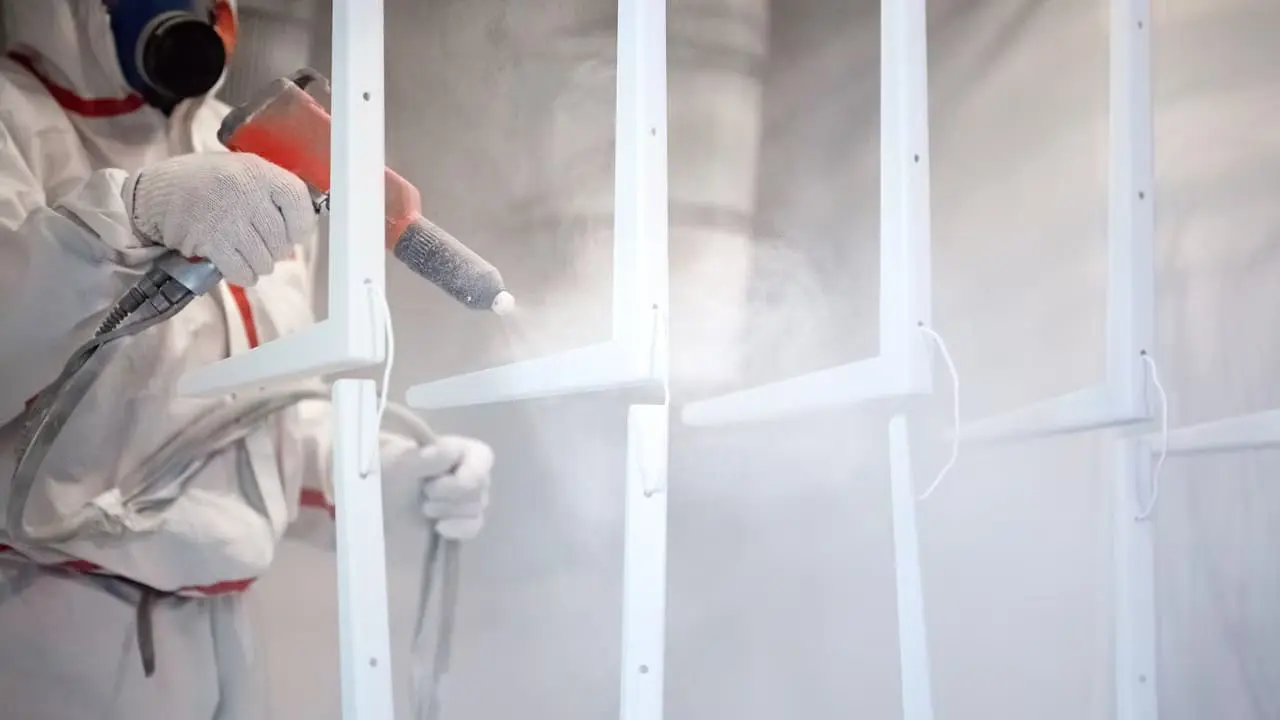
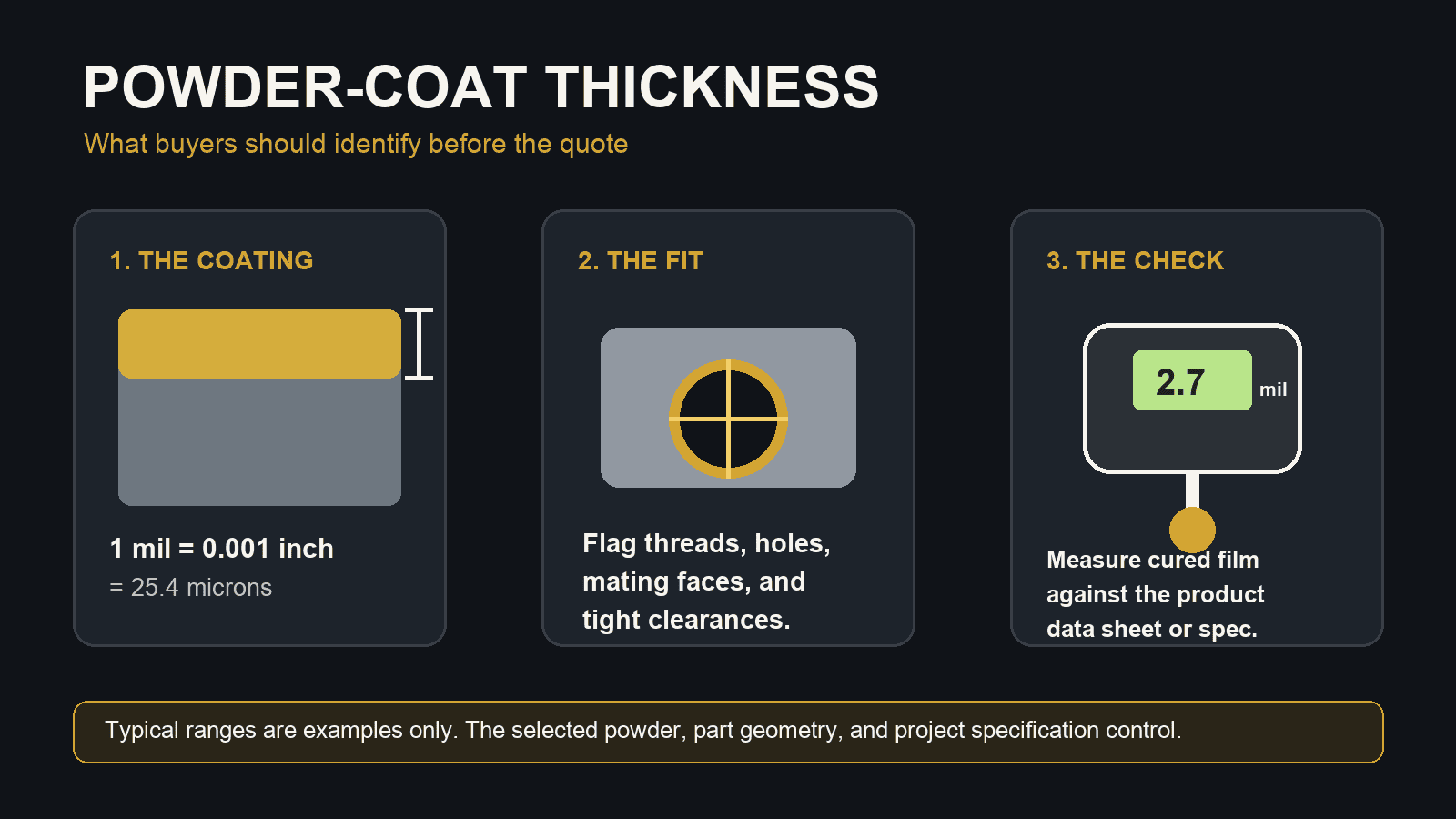
How thick is powder coating? It is commonly measured in mils, and 1 mil equals 0.001 inch (25.4 microns). A general manufacturer recommendation for many powders is at least 2.5–3.0 mils, but that is not a universal specification. The correct cured film thickness comes from the selected powder’s product data sheet and any requirements for the finished part.
That distinction matters. Film build can affect color, gloss, texture, adhesion, flexibility, impact resistance, and whether assembled parts still fit. A good drawing should identify any area where added thickness could change function.
How thick is powder coating for a typical metal part?
A mil is one-thousandth of an inch. It is not the same as a millimeter. In metric units, 1 mil equals 25.4 microns. For perspective, a specified range of 2–5 mils means a cured coating between 0.002 and 0.005 inch thick.
Coating thickness can vary across a part, especially near edges, recesses, corners, and complex shapes. That is why a single reading may not represent the whole component.
Why “thicker” is not always better
Too little coating can leave poor hiding, weak coverage, or small voids that expose the metal. Excessive film build can waste material and may contribute to incomplete cure, poor adhesion, chipping, or peeling. The goal is an even film within the required range.
The target can change with:
- Powder chemistry and formulation. Smooth, textured, metallic, thin-film, and performance powders may have different requirements.
- Color and opacity. Some colors hide the substrate at a different film build than others.
- Part geometry and service conditions. Edges, deep recesses, outdoor exposure, chemical contact, and multi-coat systems can change the coating plan.
Choose the powder and performance requirement first. Then use the manufacturer’s data sheet as the controlling document.
Mark every fit-critical area before coating
Powder coating adds material to the surface. Even a few thousandths of an inch can matter on close-tolerance assemblies. Tell the coater about:
- threaded holes, studs, and tapped features;
- bearing, bushing, and seal locations;
- mating faces and electrical-grounding points;
- slots, pins, hinges, and press-fit areas; and
- dimensions measured after coating.
These areas may need masking or a defined finished dimension. If a drawing is available, label the surfaces that must remain free of coating. Our powder coating quote checklist explains what else helps a coater review the job.
How is powder-coat thickness checked?
Most specifications refer to cured dry-film thickness. On metal, it is commonly checked with a nondestructive electronic gauge. ASTM D7091 covers magnetic and eddy-current gauge practices for coatings over ferrous and nonferrous metals. Powder can also be measured before curing to predict final thickness, but the cured result should still be verified when a specification requires it.
For critical work, state the minimum and maximum thickness, the number and location of readings, and any reporting requirement before production begins.
What should you put on the quote request?
Include the part material, selected powder or performance requirement, drawing, fit-critical surfaces, masking notes, and any inspection standard. If no thickness has been specified, describe how the part will be used so the coating plan can be reviewed. Surface condition also matters; see why surface preparation matters.
Planning a metal-finishing project? Send Salt City Metal Coatings the part details, drawings, and fit requirements so the coating and masking plan can be reviewed before production.