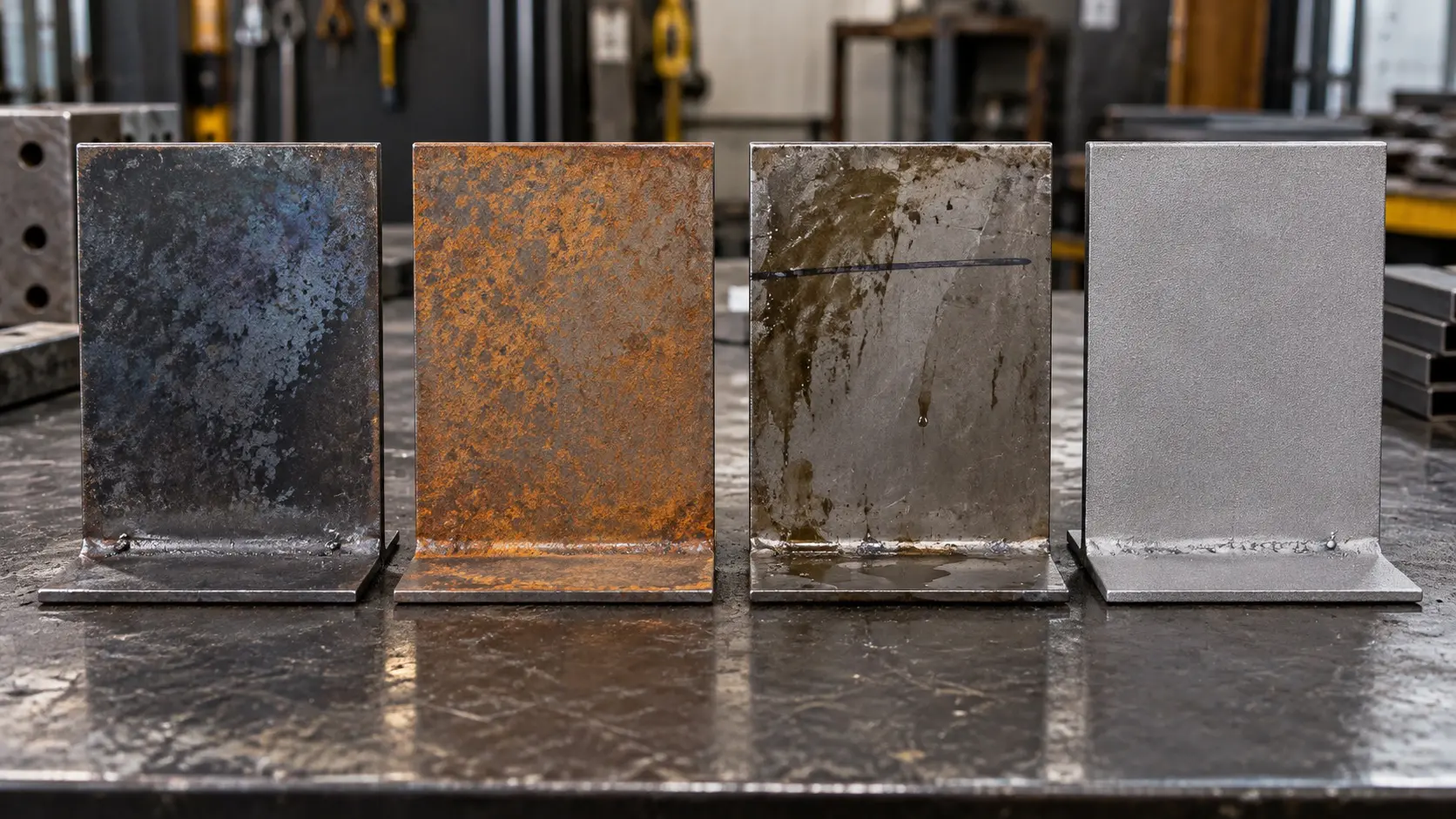
Steel is not automatically ready for powder coating just because it is new, dry, or recently fabricated. Mill scale, rust, oil, weld residue, marker, and tight inside corners can change the preparation a coating shop needs. The useful first step is to identify the steel’s actual condition and the finished part’s service environment before choosing a preparation method.
Start with the steel you actually have
“Raw steel” can describe very different surfaces. A hot-rolled plate may carry blue-black mill scale. Material stored outdoors may have light flash rust or heavier corrosion. Fabricated parts can add cutting fluid, fingerprints, grinding dust, weld spatter, anti-spatter compound, and layout marks.
Those conditions should be visible in the quote request. They help the coater decide whether cleaning, mechanical preparation, chemical pretreatment, or a combination is appropriate. The decision also depends on the coating specification, geometry, and exposure—not one universal recipe.
Five conditions that deserve a closer look
- Mill scale: The dark oxide layer left by hot rolling can vary in thickness and adhesion. Its presence should be disclosed rather than assumed harmless.
- Rust: Light surface rust, pitting, and layered scale are different starting points. Photographs should show the worst areas, edges, and seams.
- Oil and fabrication compounds: Cutting fluid, grease, silicone, and some anti-spatter products need specific attention. Abrasive preparation should not be treated as a substitute for proper cleaning.
- Weld and edge condition: Spatter, slag, sharp edges, undercut, pinholes, and tight crevices can complicate cleaning, film build, and visual uniformity.
- Marks, tape, and unknown residue: Paint markers, adhesive, labels, and shop-applied protectants may leave material that is not obvious after a quick wipe.
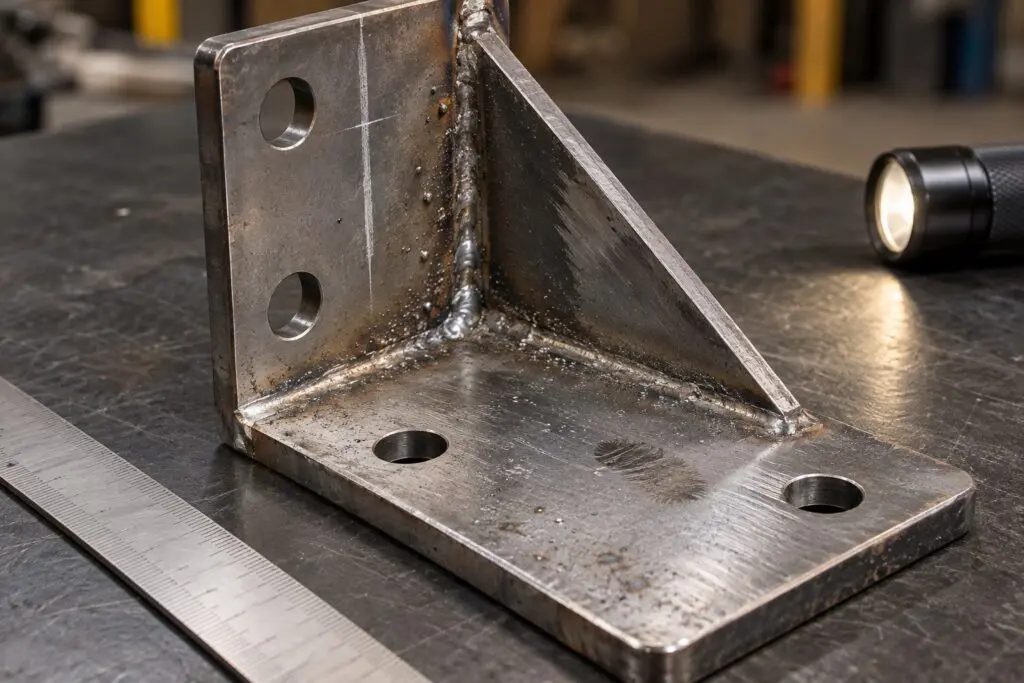
A clear close-up of welds, corners, rust, and residue is more useful than a single distant photograph. It also helps separate coating preparation from fabrication corrections that may need to happen before the part reaches the finishing shop.
The required finish determines the preparation target
The Association for Materials Protection and Performance maintains recognized standards for cleaning steel by solvent, hand tools, power tools, waterjetting, and abrasive blasting. Those standards describe levels of cleanliness; they do not make every level correct for every powder-coated part.
Manufacturer guidance makes the same practical point. TIGER Coatings’ pretreatment guidance separates cleaning, mechanical preparation, and chemical pretreatment, while the IGP Powder Coatings’ pretreatment guidance identifies steel surface condition, cleaning, coating-system design, and service environment as factors in corrosion protection.
For a buyer, the takeaway is simple: specify the outcome and exposure, then let the shop confirm the preparation plan. A decorative indoor bracket and an exterior railing do not present the same risk.
What to send before requesting a quote
- Steel type or grade, if known
- Overall dimensions, weight, quantity, and repeat frequency
- Clear photographs of mill scale, rust, welds, edges, and residue
- Indoor, outdoor, chemical, moisture, or high-wear exposure
- Required color, gloss, texture, specification, or approved sample
- Threads, bearing surfaces, grounding points, and other no-coat areas
- Any known oil, silicone, marker, adhesive, or anti-spatter product used
If you are still deciding whether blasting belongs in the process, read Does Metal Need Sandblasting Before Powder Coating? Fabricators should also review Powder Coating Welded Parts: What to Check Before Finishing.
Ready for a shop review? Send the project details and photographs to Salt City Metal Coatings. The team can confirm what information is still needed before quoting the work.