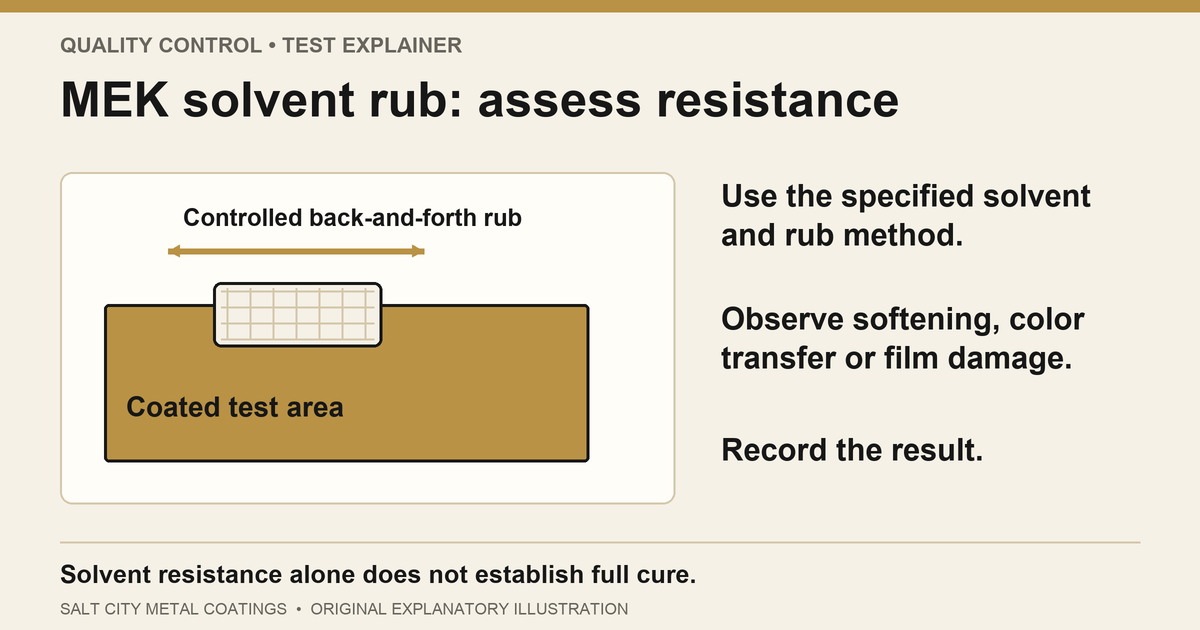
An MEK rub test checks how a coating resists a particular solvent under controlled rubbing. It can help assess the cure of a thermoset powder coating, but a result needs the powder manufacturer’s guidance and agreed acceptance criteria. It is not a universal proof of complete cure or durability. ASTM D5402 specifically distinguishes solvent resistance from full cure.
What the test actually measures
MEK stands for methyl ethyl ketone. In a solvent-rub check, a trained operator uses a solvent-wetted cloth or swab on a defined coated area and evaluates the film’s response under the selected method. A double rub is a forward-and-back movement. The procedure controls how the test is performed; the material requirements determine what result is acceptable. PPG’s cure-testing guide explains why different solvents and application methods are used.
Solvent choice matters. PPG cautions that MEK can be aggressive toward powder films, and a strong solvent can soften a film that other properties indicate is cured. A quick rub check therefore needs interpretation for that formulation. It should not replace the agreed product qualification or broader quality checks. See PPG’s explanation of the limitations.
When it is useful—and what it cannot prove
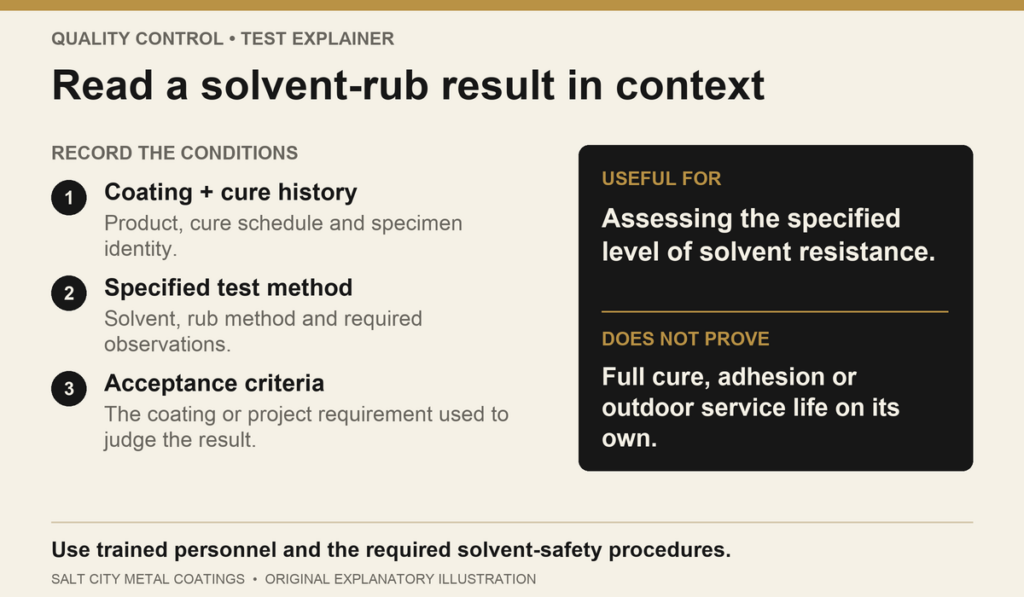
A solvent-rub check can be useful during production evaluation or when reviewing a possible cure concern. It answers a narrower question than “Is this coating suitable for every service condition?” Adhesion, film thickness and corrosion performance remain separate questions. A good solvent-rub result does not establish all of them.
There is no single rub count that passes every powder. ASTM D5402 does not prescribe the solvent, number of double rubs or expected result. Those requirements must come from the relevant coating guidance and agreed specification. Simply writing “MEK test required” leaves important decisions unresolved. ASTM’s published scope makes that boundary explicit.
Shop checks, laboratories and representative samples
ASTM describes solvent-rub testing in shop, field and laboratory settings. Routine production checks and an independently issued laboratory report serve different purchasing needs; ask which is being requested and who will perform it. An outside report or special testing arrangement should be discussed during quoting, not assumed to be included.
Agree whether the test will use an approved area on the part or a representative panel. The method may affect the finish, so the test location matters. For cure interpretation, Vitracoat emphasizes comparison with a known-cured panel representing the same system. A panel result should be identified as such, rather than presented as proof that every part was tested. Vitracoat’s technical method explains the comparison.
Solvents also require trained handling, suitable ventilation and the precautions in the supplier’s safety data sheet. This is buyer guidance, not a do-it-yourself test recipe.
What to include in a testing request
- The exact powder product, substrate and intended service.
- The required test method and revision, solvent and acceptance criteria.
- Whether to test actual parts or agreed representative panels.
- The sampling frequency, timing and responsibility for any affected finish.
- The results, sample identification and report format needed for acceptance.
Testing at Salt City
At Salt City, testing is performed at customer request under an agreed job scope, and a testing charge may apply. Coating-thickness, MEK and cross-hatch checks may be done in house. Salt spray testing is performed by an outside laboratory to help validate protocols, not to guarantee results in service. Confirm the required methods, samples, acceptance criteria and reporting before work begins.
To discuss requirements for your order, request a quote with the coating specification and testing/reporting scope. Confirm the agreed checks before approving the work; do not assume every listed test applies to every part.