The best powder coating shop is the one that can handle your specific parts, prepare them for their real service environment, control the details that affect fit and appearance, and explain how quality will be checked. Distance matters, but it should not be the only test.
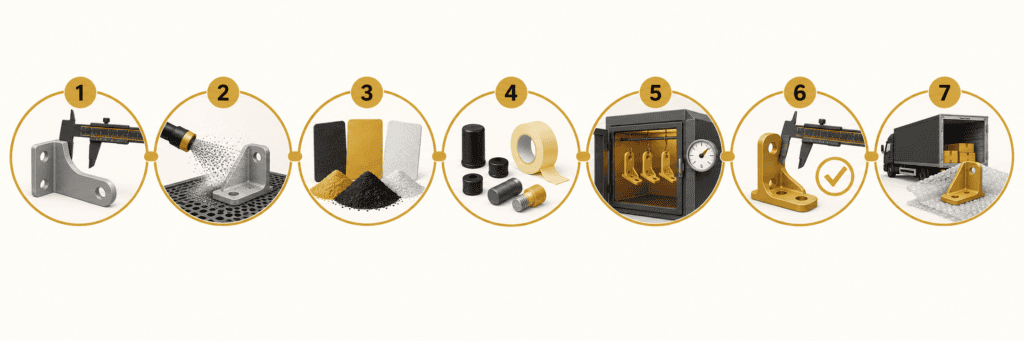
Use these seven questions before you send parts or compare quotes.
1. Can the shop handle the parts and quantity?
Give the coater the maximum part dimensions and weight, the quantity per order, the metal type, and the expected order frequency. A shop must be able to move, rack, coat, and cure the actual part—not merely fit it through a doorway.
If you are unsure whether powder coating suits the part, start with this project-fit guide.
2. How will the metal be prepared?
Good coating starts with the condition beneath it. Ask how the shop will address oil, rust, mill scale, old coating, weld residue, and other contamination. The right preparation depends on the substrate, its current condition, the coating system, and where the part will be used.
The Powder Coating Institute explains that pretreatment improves adhesion and corrosion resistance, while its technical FAQ shows why one cleaning or pretreatment plan cannot fit every application. For a closer look at abrasive preparation, read Does Metal Need Sandblasting Before Powder Coating?
3. Which powder and finish match the job?
Describe the service conditions: indoor or outdoor use, sun exposure, moisture, chemicals, cleaning, wear, and appearance requirements. Also identify the color, gloss, texture, and any product or performance specification.
Powder Coated Tough’s selection guidance emphasizes giving the supplier a detailed description of the performance needed. If this is a repeat finish, preserve the manufacturer, product code, gloss, texture, and approved sample—not just a color name.
4. What areas must remain uncoated?
Threads, bearing fits, electrical grounds, sealing faces, bores, and mating surfaces may need protection. Mark those areas on a drawing or clear photo before quoting. Ask where the shop expects rack contact marks and whether plugs, caps, or tape are included.
Use the examples in this masking guide to decide what to flag.
5. How will racking and cure be controlled?
Racking affects electrical contact, coverage, handling, and the small mark left where the part is supported. Cure also depends on the metal reaching the time and temperature required by the coating—not only on the oven’s air temperature. Ask how the shop chooses rack points and confirms the cure schedule for parts of your size and mass.
6. What will be inspected and recorded?
Agree on acceptance criteria before production. Depending on the job, that may include appearance, color or approved sample, film thickness, masked dimensions, adhesion, packaging, or a documented specification.
Certification can be one useful signal when a project requires it. PCI’s 3000 program for custom coaters evaluates processes, equipment, maintenance, and quality-control capability. Whether or not certification is required, ask the shop to explain the controls and records it will use for your parts.
7. Do the quote and logistics fit the whole project?
Compare what each quote includes: preparation, masking, powder sourcing, samples, inspection, packaging, transport, and any work outside the quoted scope. Also discuss the schedule, who approves changes, and how repeat orders will be identified. A low coating price can be costly if the assumptions are different.
Send a quote-ready project packet
A coater can answer these questions faster when you provide:
- Metal type and current surface condition
- Maximum dimensions, weight, quantity, and order frequency
- Drawings or clear photos, including masked and critical-fit areas
- Indoor or outdoor exposure and other performance needs
- Exact finish reference, approved sample, or desired color, gloss, and texture
- Applicable specifications, inspection requirements, schedule, and packaging needs
If your project may be a fit for Salt City Metal Coatings, send the project details for a practical review and quote.