
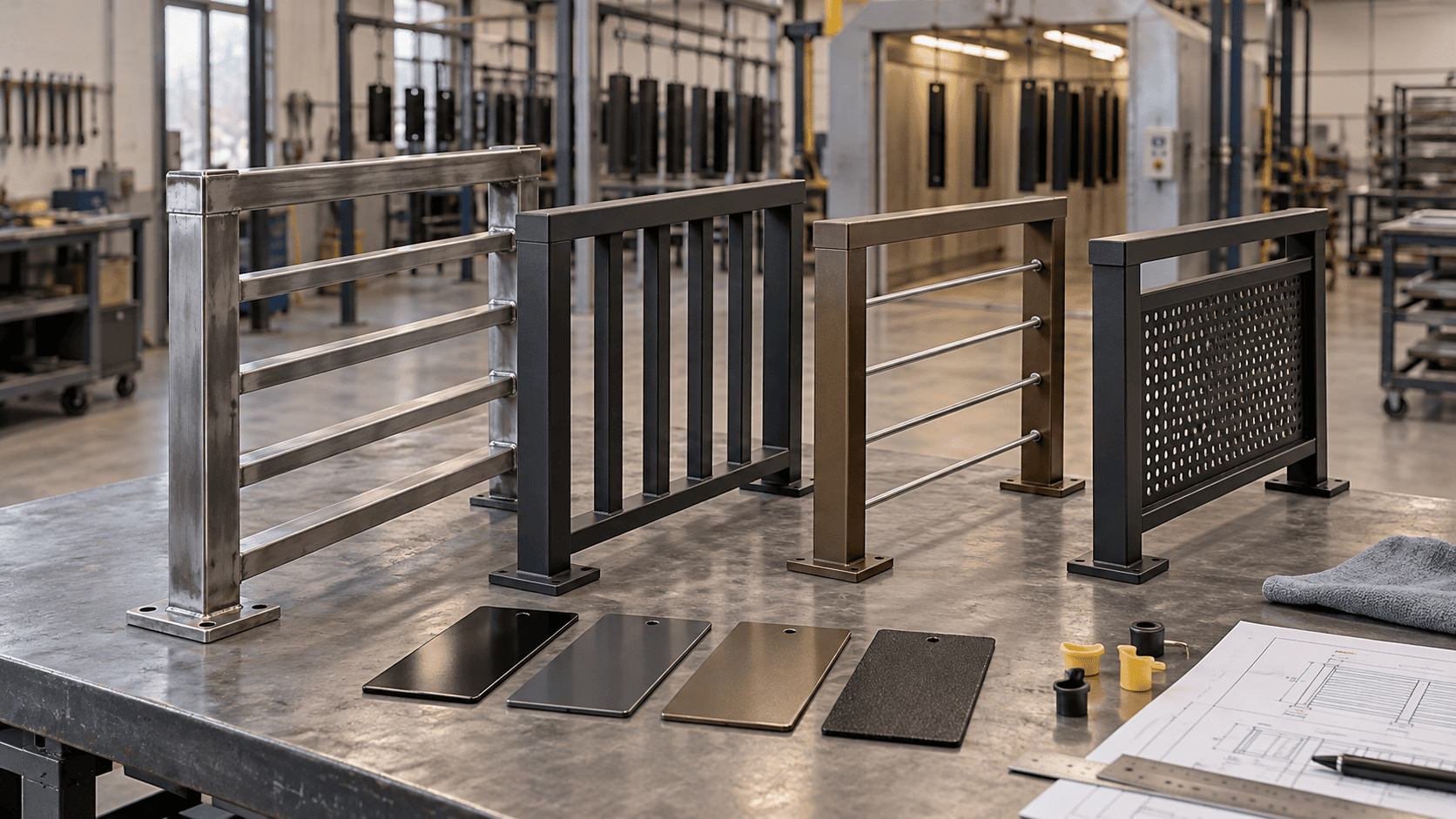
A durable powder-coated steel railing finish starts with a written finish schedule—not simply a request for black powder coat. Define the metal, exposure, preparation, corrosion system, exact appearance, areas that must remain clear, approval sample, repair plan, and maintenance expectations before coating begins.
Start with the steel condition and service environment
State whether the railing is bare carbon steel, galvanized steel, or previously coated steel. Then describe where it will be used: indoors or outdoors, sheltered or exposed, and whether it will face strong UV, moisture, industrial pollution, deicing salts, or coastal salt.
Those conditions affect preparation and coating-system decisions. An exterior steel railing exposed to rain, deicing salts, coastal air, or industrial contaminants may need a more demanding corrosion-control system than an interior handrail. Record the actual exposure rather than relying on a generic “exterior grade” request.
Specify preparation and the complete coating system
Describe the starting condition: new fabrication, mill scale, rust, oil, an existing finish, galvanizing, or oxidation. Also identify welds, laser-cut edges, corners, crevices, and other details that may affect preparation or coverage.
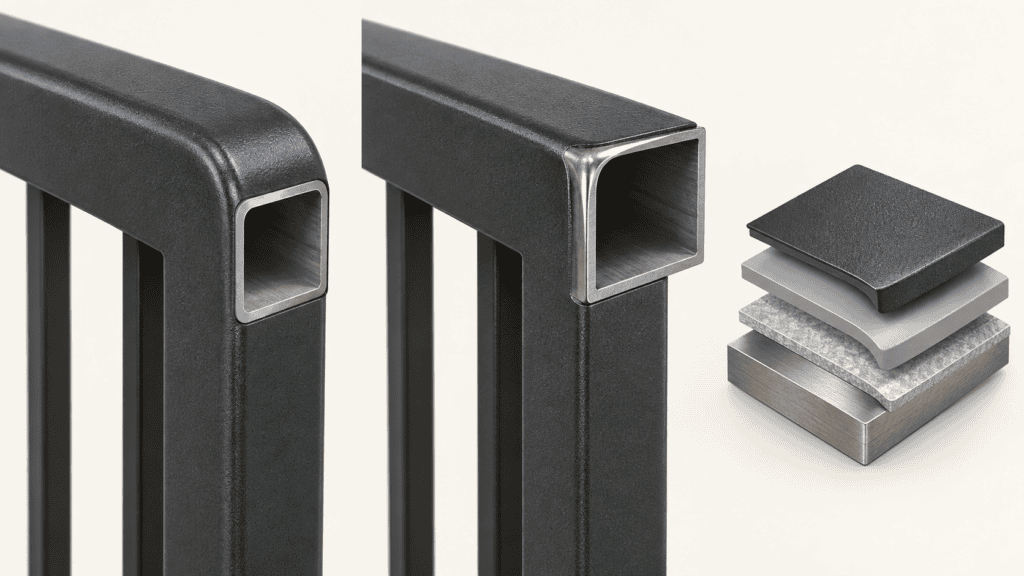
The American Coatings Association’s 2026 review of powder systems for corrosion protection explains that sharp-edge coverage can be difficult because coating may pull away from an edge during cure. It also notes that primer and topcoat choices should follow the required corrosion environment. A primer or two-coat system can be useful for some projects, but it is not automatically required for every railing.
Ask the coater to confirm the proposed preparation and coating system for the actual substrate, geometry, exposure, and specification. Salt City’s surface-preparation page explains why the starting surface must be reviewed before the process is selected.
Define the appearance with more than a color name
Record the powder manufacturer, product code, color, gloss, and texture. A phrase such as “matte black” may describe several visibly different products. For repeat work, keep an approved physical sample or finished control part when practical.
Our guide to repeat powder-coat color control explains why the product identifier, gloss, texture, approved sample, and touch-up plan should be recorded together.
Put design, masking, and handling details on the drawing
Mark threaded holes, fastener seats, grounding surfaces, mating faces, sliding connections, and other areas that must remain uncoated. Identify drain or vent features and any open tube ends that could admit water. Do not assume powder will coat the inside of a closed or narrow tube evenly.
Also tell the coater how sections will be hung, transported, assembled, and installed. Rack points, lifting points, packaging contact, and field connections can affect what should be masked and where minor handling marks might matter.
Set approval, repair, and maintenance expectations
For appearance-critical work, agree on a physical sample before the production run. State who approves it and what characteristics the sample controls. If field touch-up may be needed, identify an appropriate repair product separately; a liquid touch-up material will not automatically look or weather exactly like the original cured powder.
TIGER’s current railing and gate guidance recommends routine cleaning with mild soap, water, and nonabrasive tools, with frequency adjusted for the exposure. The project owner should receive the coating manufacturer’s care instructions when a specific product or warranty applies.
A concise railing finish schedule
- Steel substrate and current surface condition
- Interior or exterior location and environmental exposure
- Required preparation and any governing performance specification
- Primer or multi-coat requirement, if applicable
- Powder manufacturer, product code, color, gloss, and texture
- Masked areas, rack points, drainage, and assembly details
- Approved sample and acceptance responsibility
- Repair product, packaging, installation, and maintenance expectations
Send the full railing package for review
For a useful Salt City review, send drawings or clear photos, steel type or galvanizing status, dimensions and weight, quantity, starting condition, service environment, finish reference, areas that must remain uncoated, needed date, and pickup or shipping requirements. Salt City will confirm whether the railing and requested system fit the shop’s practical capabilities before quoting.