
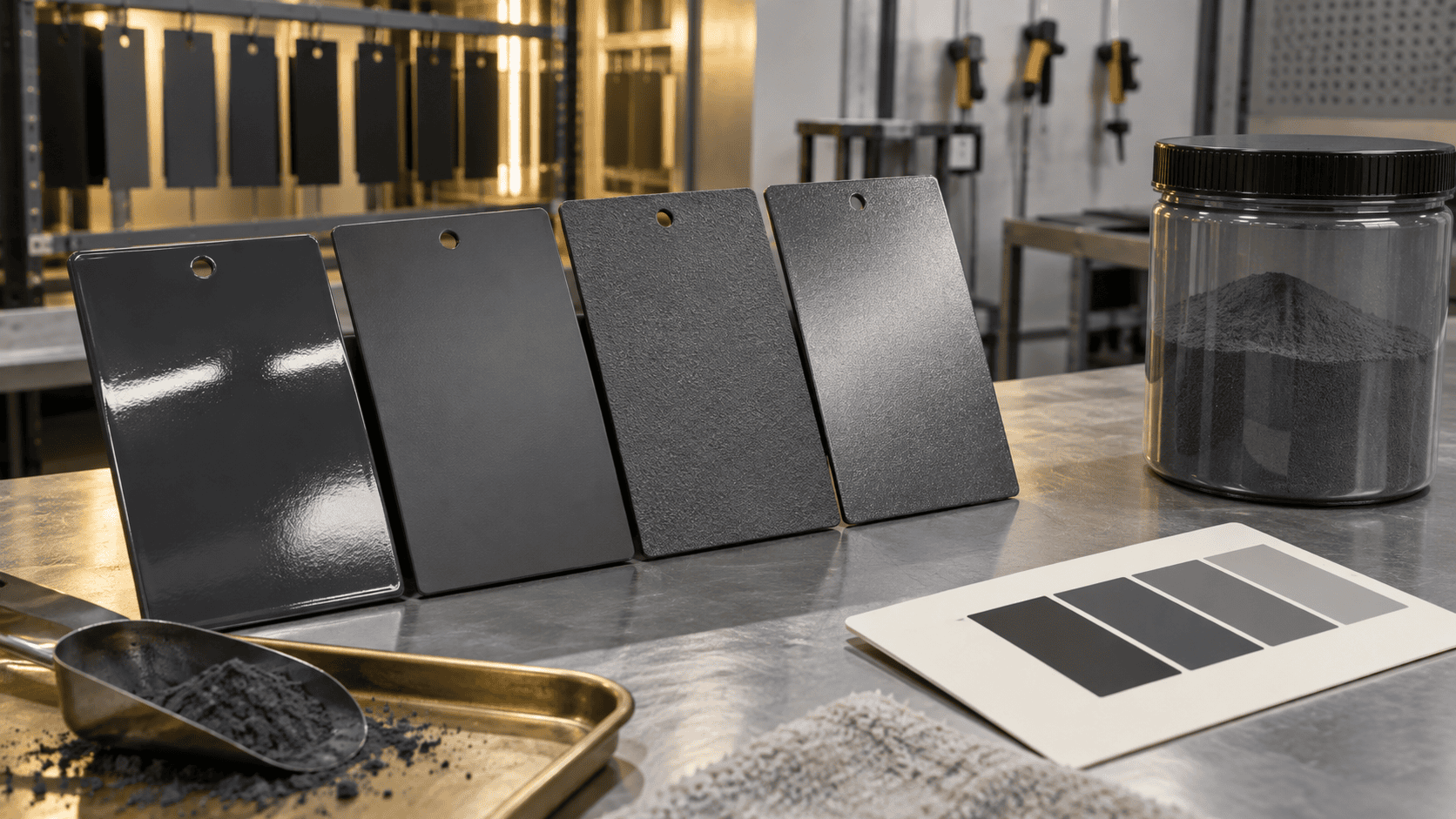
For a repeatable powder-coated finish, record more than the color name. Give the coater the powder manufacturer and product code when known, the color standard, gloss, texture, intended environment, and an approved physical sample when appearance matters.
A description such as “black,” “charcoal,” or even a RAL number can point in the right direction without fully defining the result. The same nominal color may be offered in smooth, matte, high-gloss, fine-texture, metallic, or different performance formulations.
Write down the complete finish identity
For a first order, record the selected manufacturer, exact product code, color or standard, gloss range, texture, and coating family or performance requirement. Keep that information with the current drawing revision, purchase record, or approved sample.
This matters because appearance can shift with gloss, texture, substrate, film build, and application conditions. PPG notes that digital colors may differ from the actual result and recommends viewing a physical swatch in the project environment. Its product guidance also states that film thickness can influence color and finish consistency.
Salt City’s guide to planning color and texture explains the broader finish-selection decision. For repeat work, the next step is to preserve the exact approved identity.
Use a physical sample when the match is important

Phone photos, monitor images, printed color cards, and verbal descriptions are useful for direction. They are weak acceptance standards. Ask for a coated sample panel when a new finish must match adjoining parts, a brand standard, or a previous production run.
TIGER Drylac’s color guidance says a reference sample is needed for color matching and warns that powder-coated and liquid-painted components can look different even when the same color is specified. That distinction becomes especially important when a project also needs touch-up material.
Plan touch-up as a separate material
Touch-up liquid can protect a small repair or handling mark, but it should not be assumed to reproduce the cured powder’s chemistry, texture, sheen, or weathering exactly. If touch-up is part of the project, ask three questions before ordering:
- Which powder manufacturer and product code is being used?
- What touch-up product is compatible with that finish and exposure?
- Where will a repaired area be acceptable, and how will it be approved?
For visible architectural work or repeat production, decide whether the goal is corrosion protection, a close visual blend, or an exact appearance standard. Those are different requirements.
Send a repeat-job finish record
- part number and current drawing revision;
- powder manufacturer and product code;
- color standard or approved physical sample;
- gloss and texture;
- indoor, outdoor, or other service conditions;
- quantity and expected repeat schedule;
- touch-up requirement and acceptable repair locations; and
- photos of the earlier finish when a sample is unavailable.
Include this record with the other items in our powder coating quote checklist.
Planning a new or repeat metal-finishing job? Send Salt City Metal Coatings the part details, finish reference, quantity, and service conditions so the actual powder and approval plan can be reviewed before production.