Color is often the first powder coating decision, but a useful finish specification also considers gloss, texture, lighting, part geometry, handling, service conditions, and future repeat orders. A finish that looks good on a small screen may look different on the actual metal part.
Start with the job the finish must do, then confirm the appearance with a physical sample whenever the match matters.
Choose the coating family for the use
Tell the coating shop whether the part will be indoors, outdoors, handled frequently, assembled against other parts, or exposed to a particular environment. Powder coatings are made in different chemistries for different decorative and functional needs. PPG’s powder-coating overview describes acrylic, epoxy, hybrid, polyester, and urethane systems, along with the broad range of colors, gloss levels, textures, and effects available.
Do not choose from appearance alone when weathering, corrosion exposure, chemicals, abrasion, or another performance requirement is important. State the requirement and ask which available system fits it.
Separate color, gloss, and texture
These are three related choices:
- Color is the hue or color standard.
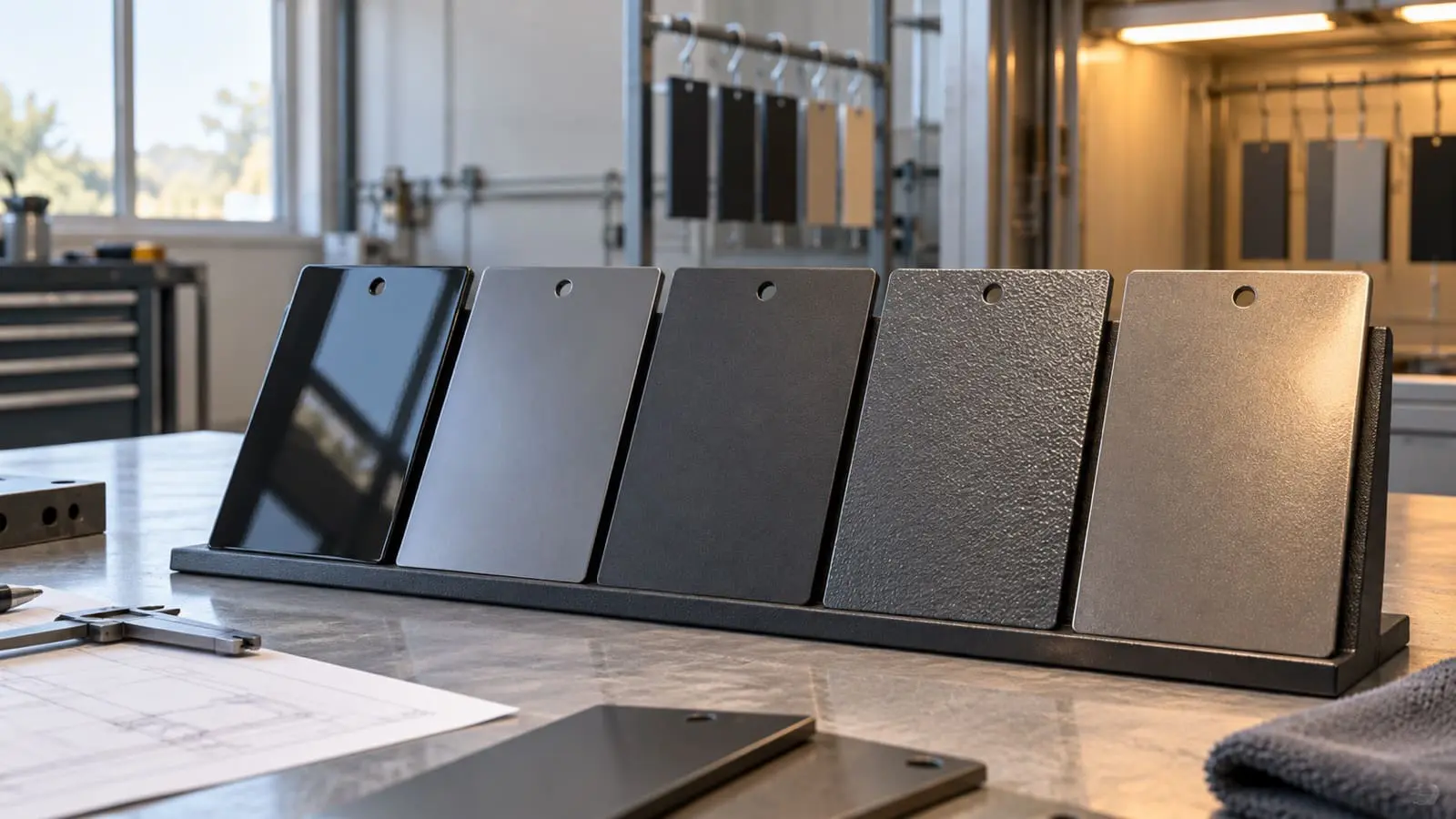
- Gloss describes how much light the surface reflects, from matte to high gloss.
- Texture changes the surface appearance and feel, from smooth to fine or heavier texture.
A color name alone does not fully specify the result. Record the manufacturer, product code, color standard when applicable, gloss, and texture. The PPG powder portfolio illustrates how coatings can vary by chemistry, color, gloss, finish, and intended performance.
Use a physical sample for important matches
Phone screens, monitors, cameras, and website images all shift color. Lighting changes it again. PPG’s online color guidance recommends viewing a physical swatch in the space where the project will be used because a digital display may differ from the actual result.
If several parts must match, send all related parts or an approved physical sample. Say whether the order is a one-time custom job or a repeat product. For repeat parts, keep the product code and approved sample with the drawing or purchasing record.
Consider the part shape and starting surface
Edges, welds, pits, grind marks, cast texture, and broad flat surfaces can affect how a finish looks. Glossy smooth finishes tend to make reflections and surface variation easier to notice. Texture changes the way light breaks across the surface, but it does not repair poor fabrication or replace necessary surface preparation.
Mark functional areas before the finish is selected
Show threads, bearing seats, electrical contact points, mating surfaces, and tight-clearance areas that may need to remain uncoated. The finish plan must support assembly and function as well as appearance.
Send this finish information with the quote
- metal, part dimensions, and quantity;
- indoor, outdoor, or other service conditions;
- preferred color or standard;
- gloss and texture;
- physical sample or related matching parts;
- areas requiring masking or close fit; and
- whether future batches must match the first order.
Salt City Metal Coatings provides powder coating in Enoch near Cedar City. Send your part photos, finish reference, and service conditions. We can review the available options for the actual project.