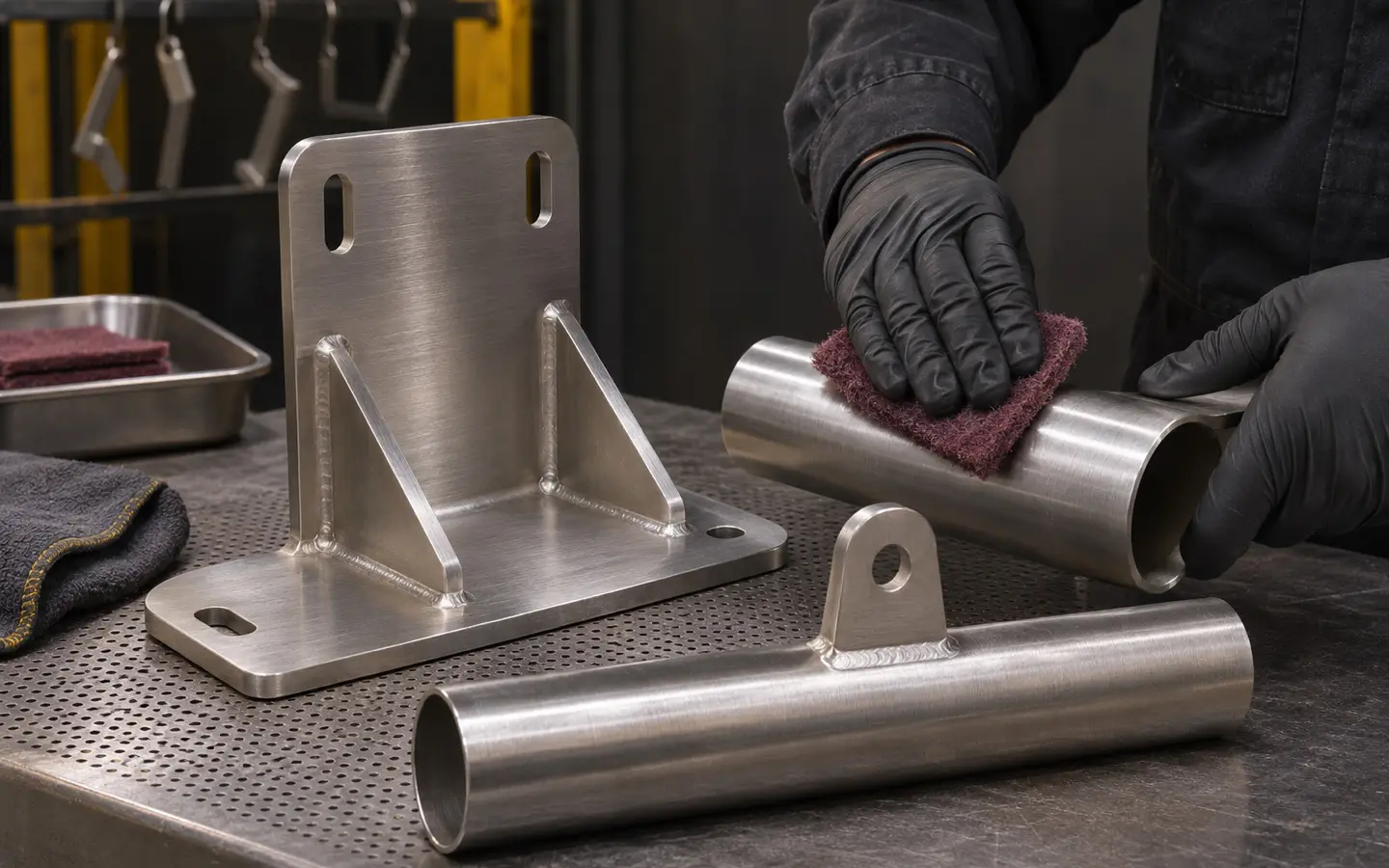
Stainless steel can be powder coated, but the finish is only as dependable as the preparation underneath it. The surface must be clean, free of fabrication contamination, and given a preparation route that promotes adhesion without damaging the part.
That route is not identical for every stainless part. Alloy, surface finish, weld condition, manufacturing residue, service environment, and the coating specification all matter. A polished architectural panel and a welded production bracket may need different preparation even when both are called “stainless steel.”
Why stainless steel needs a deliberate preparation plan
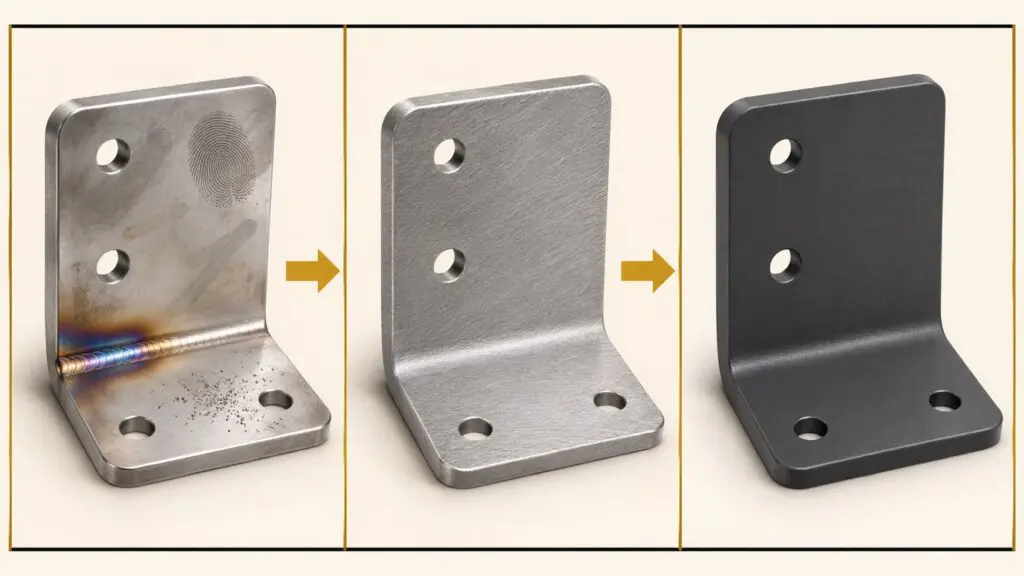
Stainless steel may look clean while still carrying oil, adhesive residue, polishing compound, weld discoloration, laser-cutting residue, or iron particles transferred during fabrication. Any of these can interfere with the coating system or affect the appearance of the finished part.
Its smooth surface can also provide too little mechanical key for dependable adhesion. In a 2026 Powder Coated Tough technical answer, the Powder Coating Institute traced delamination on coated stainless fixtures to a polished, unabraded substrate and emphasized thorough abrasion for adhesion.
A practical preparation sequence
- Identify the substrate and starting condition. Record the stainless grade if known, the mill or polished finish, welding and cutting history, existing coatings, oils, labels, adhesives, and any prior grinding or brushing.
- Remove contamination. Cleaning must remove oils, grease, dust, fabrication residue, and other material that could block adhesion. IGP Powder Coatings explains that pretreatment is intended both to remove harmful substances and to create a surface that supports coating adhesion and corrosion performance. Its pretreatment technical guide also shows why the chemistry must match the substrate; specialized stainless-steel etching is not a do-it-yourself step.
- Create the required profile or use a compatible chemical treatment. Depending on the part and specification, that may mean controlled mechanical abrasion, a stainless-compatible chemical pretreatment, or a validated combination. The correct choice must account for thin sections, dimensions, cosmetic requirements, and service exposure.
- Keep carbon-steel contamination out. The International Molybdenum Association warns that tools, brushes, abrasives, airborne particles, and poor storage can transfer iron to stainless steel and cause rust staining. Its stainless selection and fabrication guide recommends avoiding contaminated tools and abrasive media.
- Verify the complete coating system. Powder type, primer or pretreatment, film build, cure schedule, inspection method, and acceptance criteria should be considered together. A first article or adhesion check may be appropriate when the finish is new, the exposure is demanding, or the part is specification-critical.
Is blasting always required?
No single preparation method is correct for every stainless part. Abrasive preparation can be valuable when a controlled profile is needed, especially on smooth or polished surfaces. But geometry, thickness, tolerances, appearance, and the specified chemical system may point to a different route. The decision should follow the part and the performance requirement—not a blanket rule.
Salt City’s services overview explains how surface preparation and coating are reviewed as one project. The FAQ also explains why not every metal part needs media blasting.
What to send with a stainless-steel quote request
- Stainless grade or material certification, if available
- Overall dimensions, weight, quantity, and repeat-order pattern
- Photos of the full part, welds, cut edges, discoloration, and surface finish
- Fabrication history, including laser cutting, welding, polishing, grinding, and any shared tools or abrasives
- Outdoor, washdown, chemical, chloride, or high-wear exposure
- Color, gloss, texture, masking, grounding, fit, and inspection requirements
- Areas that must remain bare or retain a directional finish
Send those details through Salt City’s quote request. The shop can then review whether the part fits its equipment and which preparation and coating path should be confirmed before production.