Aluminum should be prepared according to its alloy or form, current surface condition, coating system, and service environment—not by applying one default recipe to every part. Cleaning, mechanical preparation, and chemical pretreatment solve different problems. The right combination is the one that leaves a clean, stable surface and supports the performance the finished part actually needs.
Start with the aluminum and its condition
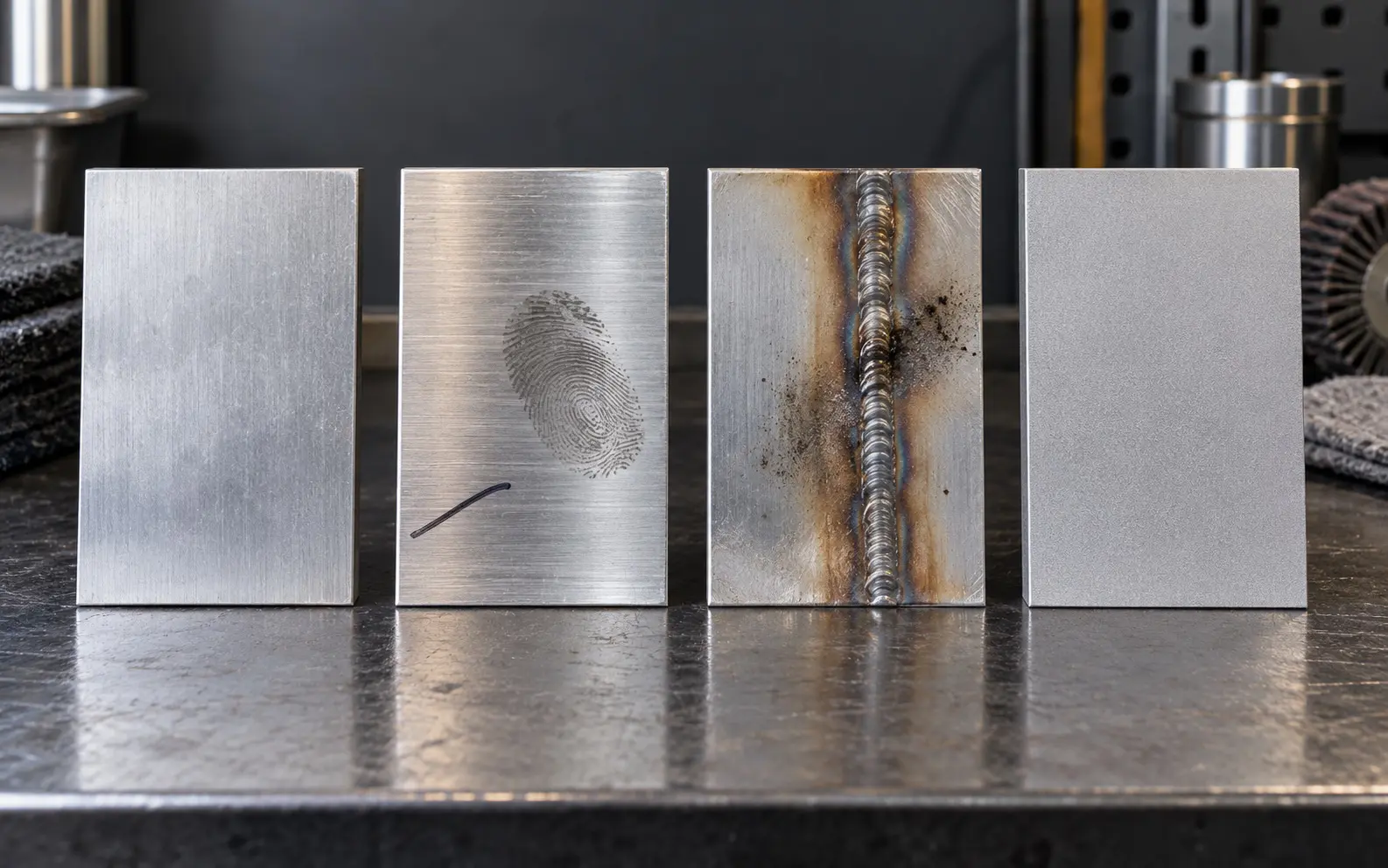
“New aluminum” describes the material’s age, not its readiness for coating. A new machined, extruded, cast, or welded part can still carry oxide, machining coolant, shop oil, fingerprints, layout marker, adhesive, silicone, weld soot, or other fabrication residue.
Before selecting a preparation method, identify four things:
- Material and form: known alloy, sheet, extrusion, casting, or weldment.
- Current condition: bare, oxidized, corroded, previously coated, polished, or contaminated.
- Finished use: indoors, outdoors, decorative, industrial, or another defined exposure.
- Required result: the powder system, written specification, appearance, masking, and corrosion-performance requirement.
The Powder Coating Institute’s technical FAQ explains that pretreatment is used to create a surface that supports adhesion and corrosion resistance. The details still depend on the substrate and the complete coating system.
Cleaning, abrasion, and conversion treatment do different jobs
Cleaning removes oils, shop soils, and other contamination that can interfere with the coating. Mechanical preparation can remove unstable oxide, corrosion, or an old finish and can create a controlled surface profile when the project requires it. Chemical pretreatment can improve adhesion and corrosion resistance as part of a specified coating system.
These steps are not interchangeable, and “blast everything” is not a complete specification. Aggressive preparation can alter thin sections, machined features, or appearance-critical surfaces. The coater should choose the sequence after reviewing the actual part, its condition, and the required finish. That is why our guide to when blasting is—or is not—needed before powder coating begins with the part rather than a universal rule.
Fabrication details can change the plan
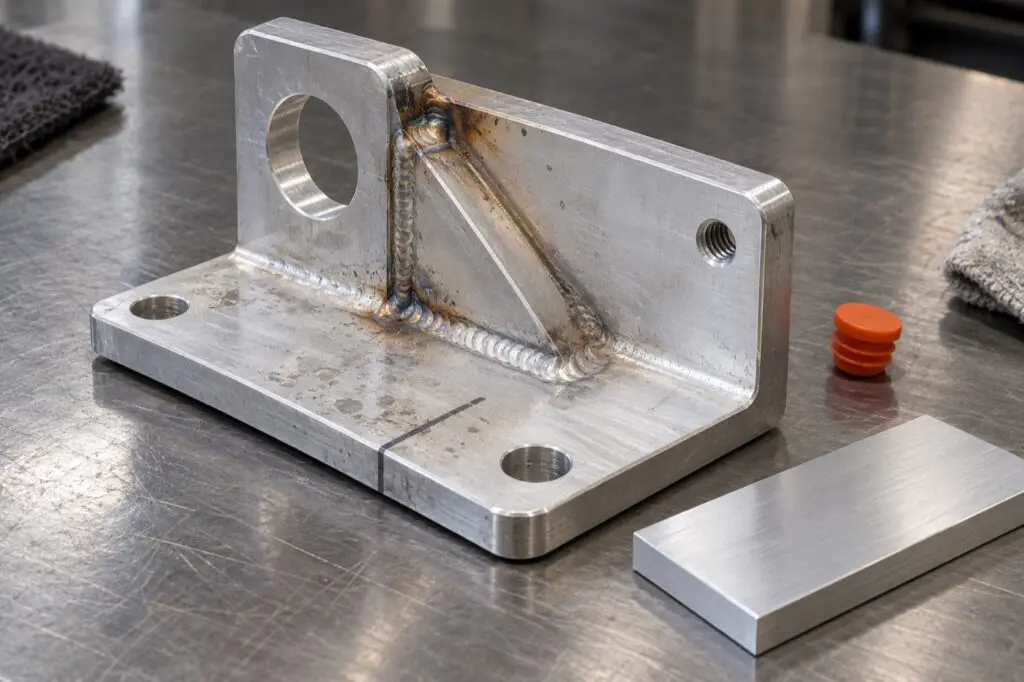
Welds, tight corners, blind holes, threaded features, mating faces, and enclosed cavities deserve attention before coating. Residue can remain around welds or in recesses, while coating buildup can change a precision fit. Mark these locations on a drawing or photo and identify every surface that must stay uncoated. Our powder-coating masking guide shows the kinds of functional areas buyers should call out.
A written architectural specification changes the conversation
For architectural aluminum extrusions and panels, a project may reference AAMA 2603, 2604, or 2605. The FGIA’s 2026 overview describes these as performance specifications for factory-applied organic coatings on architectural aluminum. They should not be assumed for every aluminum part. If one appears on a drawing, send the exact document and revision with the request.
Manufacturer guidance also matters. AkzoNobel’s Interpon architectural specification guide separates substrate selection, pretreatment, powder selection, and performance requirements rather than treating preparation as a single generic step.
What to send for an aluminum coating review
- the alloy or aluminum type, if known;
- overall dimensions, weight, quantity, and whether the order will repeat;
- clear photos of the whole part plus welds, oxidation, stains, marker, and residue;
- the service environment and required coating specification;
- the color, gloss, texture, and any approved sample;
- threads, bores, mating faces, grounding points, and other no-coat areas; and
- known coolants, release agents, adhesives, sealants, or prior coatings.
Next step: send Salt City the project details and photos. The team can then review the aluminum, the required finish, and the actual part geometry before recommending a preparation and coating plan.